

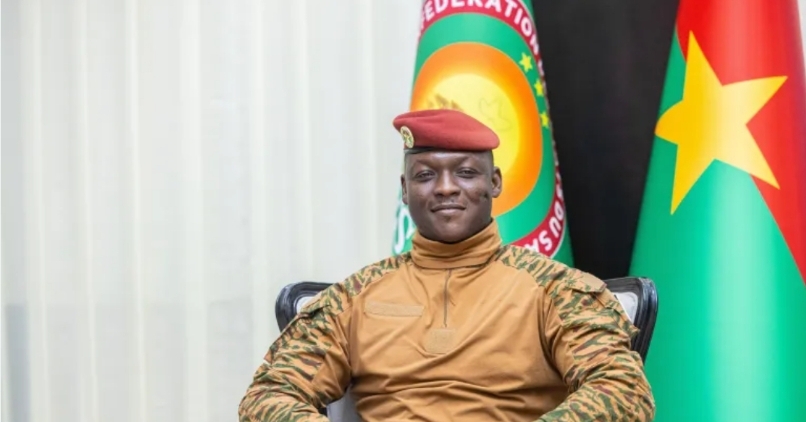
Burkina Faso’s military-led government has dissolved all political parties and formations, marking one of the most sweeping political decisions since Captain Ibrahim Traoré seized power and deepening the country’s radical break with its past political order.
The decision was taken on Thursday during a Council of Ministers meeting, where the government adopted a decree formally abolishing political parties as part of what authorities describe as the ongoing “refoundation of the state.” The move effectively suspends multiparty political activity nationwide, with no clear timeline given for its restoration.
Announcing the decision, Minister of Territorial Administration and Mobility Émile Zerbo said the proliferation of political parties had eroded national unity and weakened social cohesion at a time when Burkina Faso faces severe security and economic challenges.
“The multiparty system, as it evolved, became a factor of division rather than cohesion,” Zerbo said, arguing that political fragmentation had undermined coordination and national solidarity in the fight against terrorism and insecurity.
Burkina Faso has been battling a violent insurgency linked to extremist groups for more than a decade, a crisis that has displaced millions and destabilized large parts of the country. Military leaders say extraordinary measures are necessary to restore order, reclaim sovereignty, and rebuild state authority.
The dissolution of political parties comes as Burkina Faso strengthens its alliance with Mali and Niger under the Alliance of Sahel States (AES), a regional bloc formed by the three military-led governments following their withdrawal from ECOWAS. The alliance emphasizes security cooperation, economic sovereignty, and what its leaders describe as African-led solutions free from external influence.
Supporters of the move argue it reflects growing popular frustration with traditional political elites and externally driven governance models. They see Traoré’s leadership as part of a broader continental push for self-determination and control over national resources.
Critics, however, warn that abolishing political parties risks narrowing political space and entrenching military rule. Human rights groups and pro-democracy activists have expressed concern that the decision could silence dissent and delay a return to constitutional order.
The government insists the measure is exceptional and temporary, shaped by the country’s extraordinary security and political circumstances. Officials maintain that the long-term objective is the construction of a stronger, more sovereign state capable of delivering peace, stability, and development.
As Captain Ibrahim Traoré consolidates his grip on power, Burkina Faso finds itself at the center of a wider African debate hailed by supporters as a symbol of resistance and independence, and questioned by critics worried about the future of democratic governance in the Sahel.
What is clear is that Burkina Faso has chosen a bold and confrontational path, redefining its relationship with political pluralism, regional institutions, and former colonial powers in pursuit of what its leaders describe as genuine independence.