


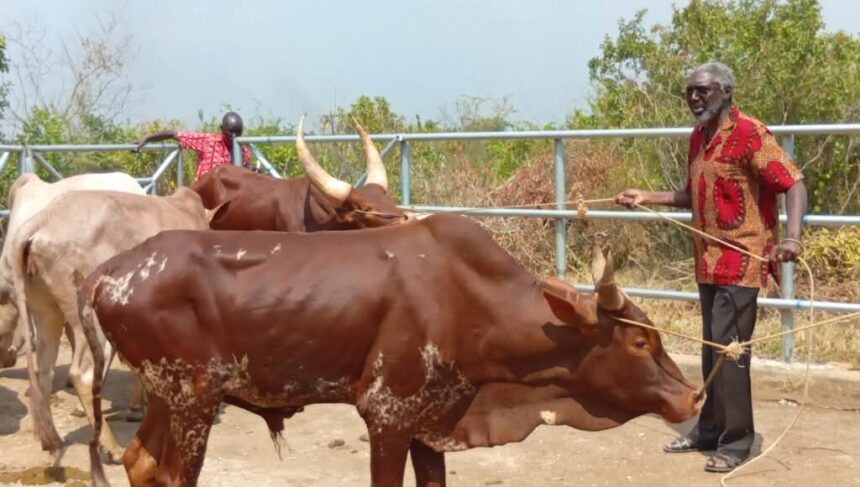
The President of the Uganda People’s Congress, Jimmy Akena, has intensified efforts to revive livestock infrastructure in Northern Uganda through the restoration of a cattle dip in Mucwini East Sub County.
The facility, located in Kel Polo village, Pubech parish, was rehabilitated under the Jimmy Akena Foundation and officially handed over to the community, with several farmers turning up to have their cattle dipped free of charge. The initiative is aimed at controlling livestock diseases such as Nagana and Foot-and-Mouth Disease, which have long affected cattle productivity in the region.
Local farmers have welcomed the intervention, describing it as both timely and cost-saving. Job Kilama, a cattle farmer from Likol A village, noted that he had been spending up to UGX 35,000 every two weeks on tick control using sprays, a cost he expects will now reduce significantly with the availability of the communal dip.
Area leaders say attention is now shifting toward sustainability. According to Richard Odong Herbert, the LC III Chairperson of Mucwini East, plans are underway to engage the community on a manageable user fee that will ensure maintenance of the facility without overburdening farmers.
Historically, cattle dips were a key part of Uganda’s livestock disease control strategy, with more than 100 constructed across the country in the 1970s. However, many fell into disrepair over the years, leaving farmers to rely on more expensive and less coordinated disease control methods.
Akena says the restoration of such infrastructure is not only about animal health but also economic transformation. He argues that improving livestock standards in Northern Uganda will position the region to tap into international markets, particularly in the Far East, including China, where demand for beef continues to grow.
The Mucwini project marks the second such restoration by the foundation, following a similar initiative in Akokoro village in Apac District. Leaders say more rehabilitations are planned as part of a broader push to revitalise agriculture and strengthen household incomes across the sub-region.