

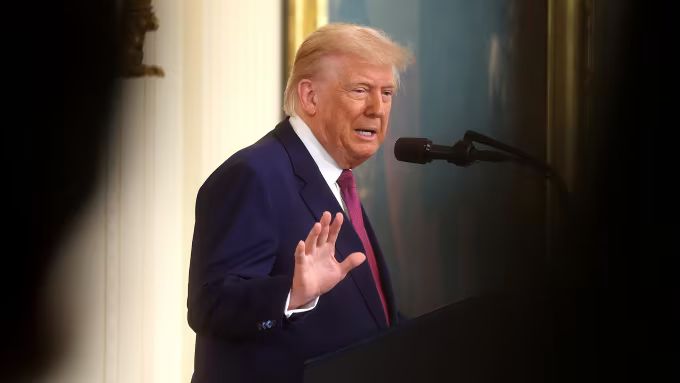
U.S. President Donald Trump has announced a temporary halt to planned military strikes on Iran’s power plants, signaling a cautious diplomatic opening following what he described as “very good and productive conversations” with Tehran.
Trump said he ordered a five-day postponement of attacks on Iran’s energy infrastructure, contingent on the success of ongoing talks aimed at achieving a “complete and total resolution” of hostilities in the Middle East. The decision marks a shift from his earlier hardline stance, where he had issued a 48-hour ultimatum demanding Iran reopen the strategic Strait of Hormuz, warning of severe military consequences if it failed to comply.
The Strait of Hormuz remains a critical artery for global energy supplies, handling nearly 20% of the world’s oil exports. Its recent disruption has rattled international markets, underscoring the high stakes of the standoff.
Iran had responded with strong warnings of its own, threatening to target energy and water infrastructure across the Gulf region, including in countries such as Qatar, Bahrain, and Saudi Arabia, which it accuses of supporting U.S. military operations.
Despite Trump’s claims of progress, Iranian officials have pushed back. State-linked sources quoted by local media insist there have been no direct talks with Washington, suggesting instead that the U.S. may have stepped back amid fears of broader regional escalation.
The development has drawn global attention, with Keir Starmer holding discussions with Trump emphasizing the urgency of reopening the Strait to stabilize global shipping and energy markets.
Markets responded swiftly to the de-escalation signal, with oil prices dropping and financial indices recovering from earlier losses. However, the broader regional situation remains fragile, as ongoing military operations involving Iran-backed groups continue to raise the risk of renewed confrontation.