


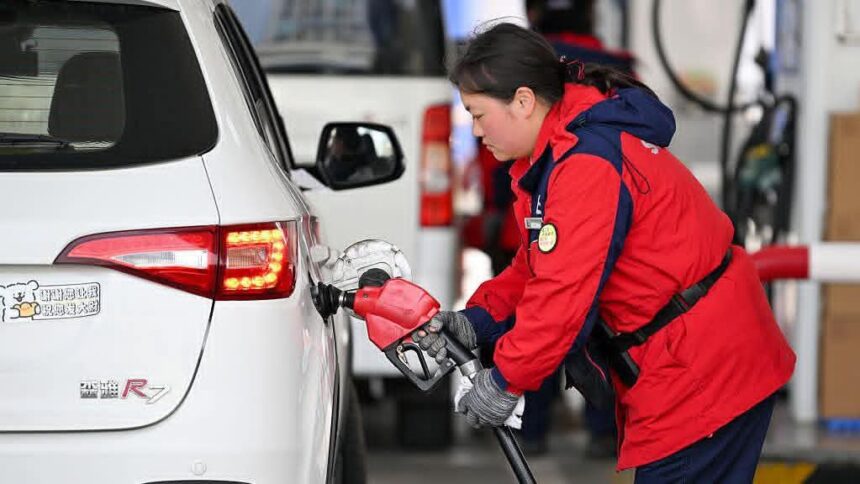
China has moved to scale back planned fuel price increases in a bid to cushion motorists and stabilize its domestic economy as global oil prices surge due to tensions involving Iran.
Authorities had initially prepared for a sharp rise in petrol prices, reflecting the spike in global energy markets. However, the government intervened to limit the increase, aiming to reduce the immediate financial burden on consumers and businesses.
The move comes as disruptions around the Strait of Hormuz—a vital global oil transit route—continue to shake energy markets. The strait handles roughly 20% of the world’s oil supply, making it highly sensitive to geopolitical instability.
Analysts say China’s decision reflects broader concerns among major economies about inflation and economic slowdown, as higher fuel costs ripple through transport, manufacturing, and food prices.
By stepping in to control domestic fuel prices, Beijing is attempting to strike a balance between market realities and economic stability, even as the global energy outlook remains uncertain.