

The Democratic Front (DF) has escalated its challenge against the 2026 general elections, petitioning the Constitutional Court to investigate what it describes as widespread irregularities that compromised the integrity of the electoral process.
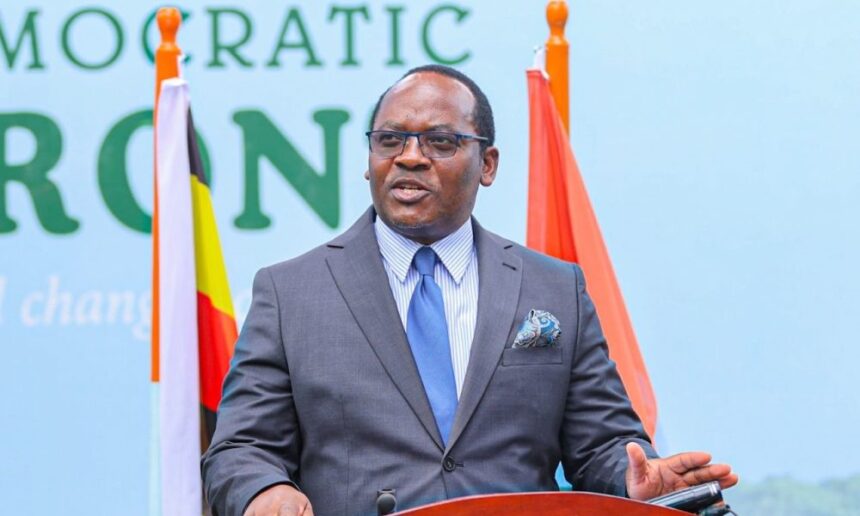
The petition, filed by DF President Mathias Mpuuga Nsamba, outlines a series of concerns the party believes fundamentally undermined the credibility of the elections. Addressing the media, Mpuuga stated that the move is aimed at seeking judicial clarity and safeguarding constitutional order.
At the center of the petition are allegations of military involvement in the electoral process, which the party argues contravenes principles of civilian-led democratic governance. The DF also cites the failure of biometric verification machines, questioning both their reliability on polling day and the legality of their procurement.
Further concerns relate to what the party describes as irregularities in the demarcation of polling stations and constituencies by the Electoral Commission. According to the petition, these inconsistencies may have affected voter access and representation.
The DF is also challenging the requirement for presidential candidates to collect endorsement signatures from at least 100 registered voters across two-thirds of the country’s districts, arguing that the provision places an unfair burden on candidates and may limit political competition.
In addition, the party raises questions about the transparency of the national voters’ register, alleging unlawful updates and compilation processes that could have compromised its accuracy. It also criticizes what it calls opaque tallying and transmission of results from district tally centers, suggesting that the lack of transparency weakened public trust in the final outcome.
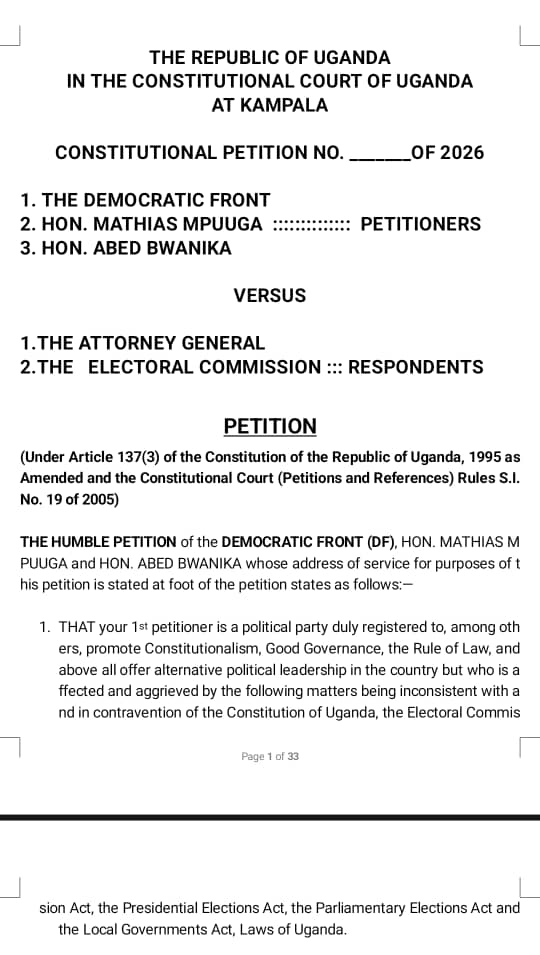

Mpuuga emphasized that the accumulation of these issues renders the 2026 elections “a sham,” and called on the Constitutional Court to make a definitive ruling on the legality and validity of the process.
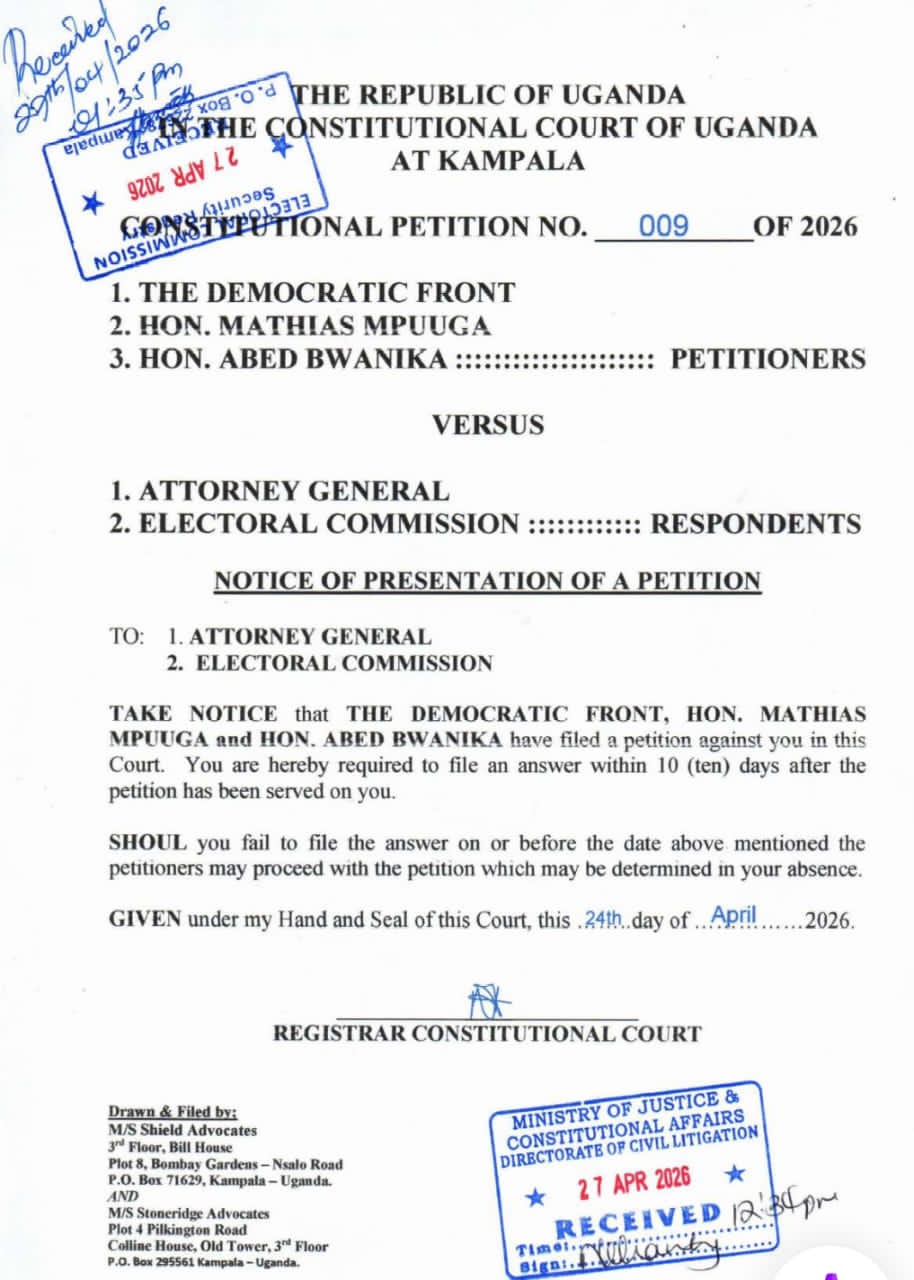

The petition sets the stage for a potentially significant legal battle that could shape public confidence in Uganda’s electoral systems and influence future reforms. Legal experts say the court’s interpretation will be critical in determining whether the concerns raised amount to procedural lapses or constitutional violations.