


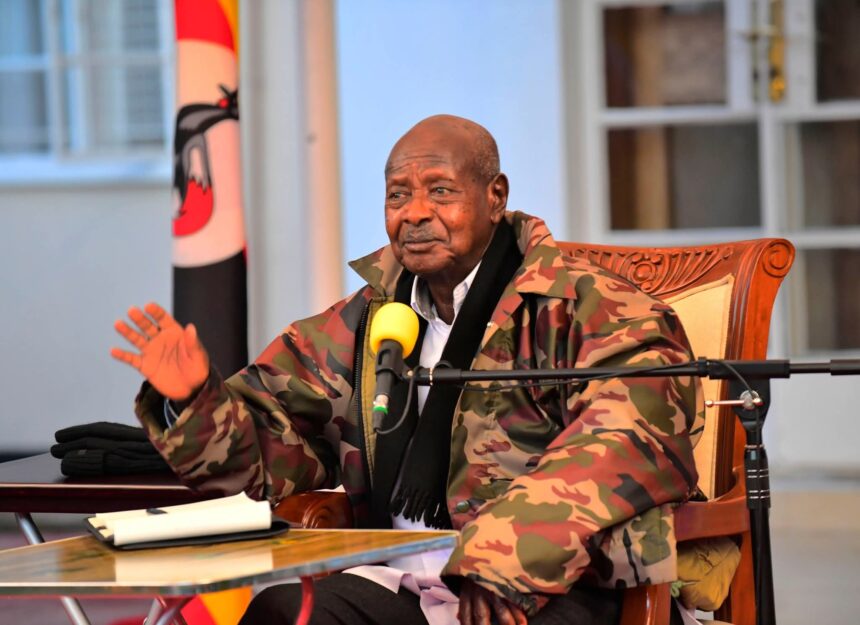
President Yoweri Kaguta Museveni has said he long lost interest in football because his attention became fully consumed by Africa’s development challenges and the continent’s future.
Speaking candidly about his personal priorities, Museveni argued that excessive focus on European football and foreign entertainment risks distracting Africans from critical issues affecting their own societies.
“I myself was a footballer. I gave up football, I forgot. I don’t play. If I were a footballer, I wouldn’t play. How can I go to watch other people play?” Museveni said.
The President added that his thoughts are constantly centered on the continent’s transformation and strategic direction.
“I am always thinking about Africa, Africa, Africa — not football clubs,” he remarked.
Museveni’s comments reflect a long-standing ideological position he has repeatedly expressed over the years, emphasizing African self-reliance, political consciousness, economic transformation, and Pan-African unity.
The Ugandan leader has often argued that many Africans devote too much time to external cultural and political influences while paying insufficient attention to local governance, industrialization, education, and continental integration.
His remarks are likely to spark mixed reactions, particularly among Africa’s large football-following population. Football remains the continent’s most popular sport, with millions of fans closely following European leagues such as the English Premier League, UEFA Champions League, and other international competitions.
Critics may view Museveni’s comments as dismissive of a sport that not only entertains but also creates employment, business opportunities, and national pride across Africa.
Supporters, however, may interpret his message as a broader call for Africans especially young people to become more engaged in addressing the continent’s economic and political challenges instead of becoming overly absorbed in foreign-centered entertainment culture.
Museveni has consistently advocated for industrialization, regional integration, value addition, and ideological orientation as key pillars for Africa’s future growth and independence.