

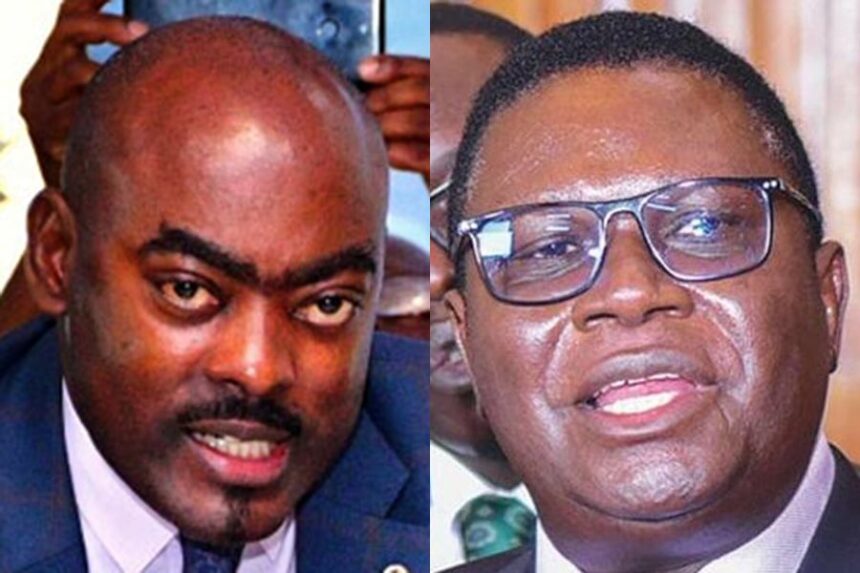
Fred Mukasa Mbidde has formally declared his intention to challenge Norbert Mao for the presidency of the Democratic Party, signaling a dramatic fallout between two longtime political allies.
Mbidde, who serves as the party’s vice president and previously represented Uganda in the East African Legislative Assembly, reportedly communicated his decision to Mao ahead of the party’s upcoming delegates’ conference.
The move marks a major shift in the internal dynamics of DP, ending a political partnership that has shaped the party’s leadership structure for more than 16 years.
For over a decade, Mao and Mbidde worked closely to consolidate influence within the party, fend off internal challengers, and drive key strategic decisions. Their alliance was instrumental in securing Mbidde’s two terms at EALA and also supported the rise of Gerald Siranda to the regional parliament.
The duo also jointly participated in negotiations surrounding the controversial cooperation agreement between DP and President Yoweri Museveni and the ruling National Resistance Movement.
According to party insiders, the arrangement was expected to create opportunities for both Mao and Mbidde within government. While Mao later secured appointment as Minister of Justice and Constitutional Affairs, Mbidde’s anticipated ministerial appointment never materialised.
Political observers say the development appears to have deepened tensions within the party and may have triggered the current leadership contest.
Mbidde had previously hinted at challenging Mao before later backing him during the controversial Mbarara delegates’ conference, where Mao secured another term as party president. At the time, many interpreted the support as a sign that Mbidde remained aligned with the party leadership and could eventually benefit from the DP-NRM cooperation arrangement.
However, Museveni’s latest Cabinet appointments excluded Mbidde, despite widespread speculation that he could be rewarded with a government role.
Mbidde has now openly criticised the direction under Mao’s leadership, arguing that the cooperation arrangement with the NRM weakened DP’s political identity and bargaining power.
The emerging contest is expected to intensify debate within DP over the future of the party, its relationship with the ruling government, and the direction of opposition politics ahead of Uganda’s next electoral cycle.