

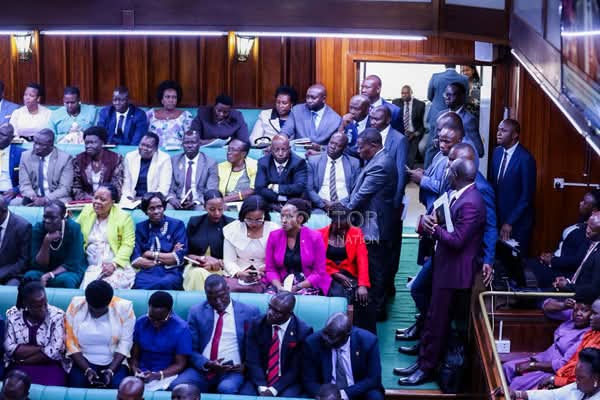
Several Members of Parliament in Uganda’s 12th Parliament were on Wednesday forced to stand or seek space in the public gallery after the parliamentary chamber became overcrowded during plenary proceedings.
The incident happened during the May 28 sitting, highlighting the growing pressure on Parliament’s aging infrastructure as the number of legislators continues to rise.
The current chamber, which was originally designed to accommodate about 80 legislators, is now being used by more than 500 MPs following the expansion of Uganda’s legislature over the years. With the 12th Parliament comprising 527 members, including ex-officio representatives, available seating space has become increasingly insufficient.
Some lawmakers were seen squeezed in corners of the chamber, while others occupied seats in the gallery normally reserved for visitors and members of the public. A number of MPs reportedly remained standing during parts of the session as parliamentary staff struggled to manage the congestion.
The overcrowding has once again drawn attention to the delayed construction of the proposed new parliamentary chambers, a project estimated to cost about Shs200 billion.
The new chambers project was intended to provide a larger and more modern legislative space capable of accommodating the expanding size of Parliament and improving working conditions for legislators. However, the project has faced repeated delays, missed timelines, and growing public scrutiny over its cost.
Several legislators privately expressed frustration over the cramped conditions, saying the congestion undermines effective debate, concentration, and the overall conduct of parliamentary business.
“This situation is not sustainable for a Parliament of this size,” one MP remarked after the sitting.
The overcrowding challenge has persisted for years as Uganda continues to increase the number of constituencies, districts, and special interest representatives, leading to a steady rise in the number of MPs.
Parliamentary officials have previously defended the need for new chambers, arguing that the current facility can no longer adequately serve the country’s legislative demands.
The latest incident now places renewed pressure on government and parliamentary authorities to fast-track completion of the new chambers project as the 12th Parliament begins its legislative work.