

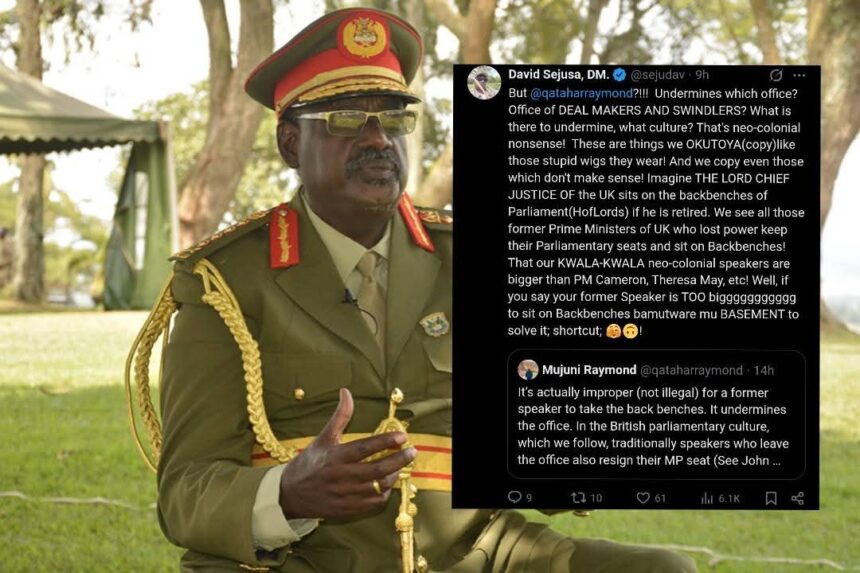
Retired General and former intelligence chief David Sejusa has criticized arguments that former Speakers of Parliament should not sit on the parliamentary backbenches after leaving office, describing such views as a reflection of “neo-colonial thinking.”
Sejusa dismissed the notion that former Speakers deserve special seating arrangements or treatment once they return to Parliament as ordinary legislators, arguing that Uganda should stop blindly copying traditions inherited from former colonial powers.
Speaking on the matter, the outspoken retired general compared the debate to Uganda’s continued use of colonial-era judicial wigs and customs, which he said have little relevance to the country’s current realities.
He pointed to the example of the United Kingdom, where former prime ministers continue serving as Members of Parliament after leaving office, while retired senior judges take up positions in the House of Lords.
According to Sejusa, if such prominent leaders can continue serving within established parliamentary structures, there is no reason former Speakers in Uganda should be considered too important to occupy ordinary seats in the House.
“Former Prime Ministers remain MPs and retired judges continue serving in the House of Lords. Why should former Speakers be treated differently?” he argued.
In a characteristically sarcastic remark, Sejusa also took a swipe at Parliament itself, describing it as an “office of deal makers and swindlers.” He jokingly suggested that if some people believe the backbenches are beneath former Speakers, then they should instead be assigned space in the “basement.”
His comments add to an ongoing debate about the role and status of former parliamentary leaders who retain elected seats after leaving the Speaker’s chair.
The discussion has gained attention following the transition to Uganda’s 12th Parliament, where questions have emerged over protocol, seating arrangements, and the position of former holders of high constitutional offices within the legislative chamber.
Political analysts say the debate reflects broader questions about parliamentary tradition, institutional culture, and how Uganda balances inherited Westminster practices with its own evolving democratic institutions.