
Eritrea remains one of Africa’s most tightly controlled political systems, shaped by decades of conflict, strong state control, and a unique blend of ancient history and Italian colonial heritage.
Since gaining independence from Ethiopia in 1993, Eritrea has operated as a single-party state under the People’s Front for Democracy and Justice (PFDJ), the only legally recognized political organization in the country.
President Isaias Afwerki has remained in power since independence, making him one of Africa’s longest-serving leaders. Eritrea has never held a presidential or national election since independence, and there are no privately owned newspapers operating within the country.
The government maintains tight control over political activity, media, and civil society, a situation that has frequently drawn criticism from international human rights organizations. Supporters of the government, however, argue that Eritrea’s strict system has helped preserve national sovereignty and stability in a volatile region.
Despite its political isolation, Eritrea possesses a rich historical and cultural identity. The country was once part of the ancient Kingdom of Aksum, one of Africa’s great early civilizations known for trade and monumental architecture.
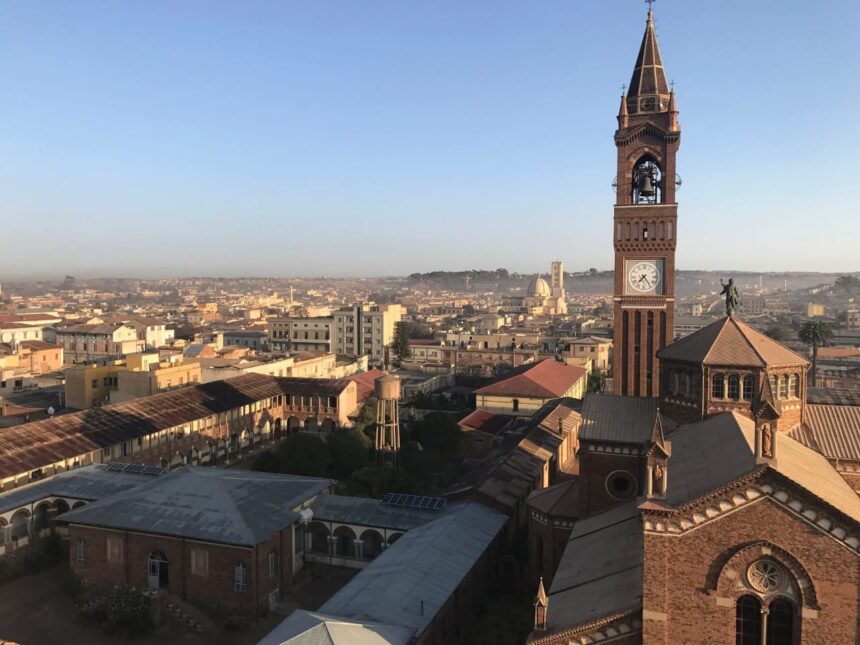
Its capital, Asmara, is internationally celebrated for its remarkably preserved Italian colonial architecture. Often referred to as “Little Rome” or “Africa’s Little Rome,” Asmara was designated a UNESCO World Heritage Site because of its unique modernist buildings, boulevards, and urban planning dating back to the Italian colonial era.
Eritrea is also known for its strong cycling culture, with the sport enjoying widespread popularity across the country. Eritrean cyclists have increasingly gained recognition in international competitions, reflecting the country’s deep-rooted passion for the sport.
Geographically, Eritrea is relatively small, covering approximately 117,600 square kilometers along the Red Sea coast. Yet despite its size, the country holds significant archaeological importance. Some of the oldest human remains ever discovered were found in Eritrea, with evidence suggesting human existence in the area dating back nearly one million years.
Regionally, Eritrea has experienced a turbulent history marked by armed conflicts and strained relations with neighbors including Ethiopia, Djibouti, and Yemen. Although relations with Ethiopia improved after the 2018 peace agreement, tensions in the Horn of Africa continue to shape Eritrea’s security and foreign policy.
Today, Eritrea remains one of the continent’s most distinctive yet least understood nations — balancing ancient heritage, strict political control, and strategic importance in the Horn of Africa.