
Under the thunder of a 21-gun salute and the precision of a tightly choreographed military parade, Yoweri Kaguta Museveni was sworn in for a seventh term as President of Uganda, extending a presidency that has now shaped the country’s political landscape for nearly four decades.
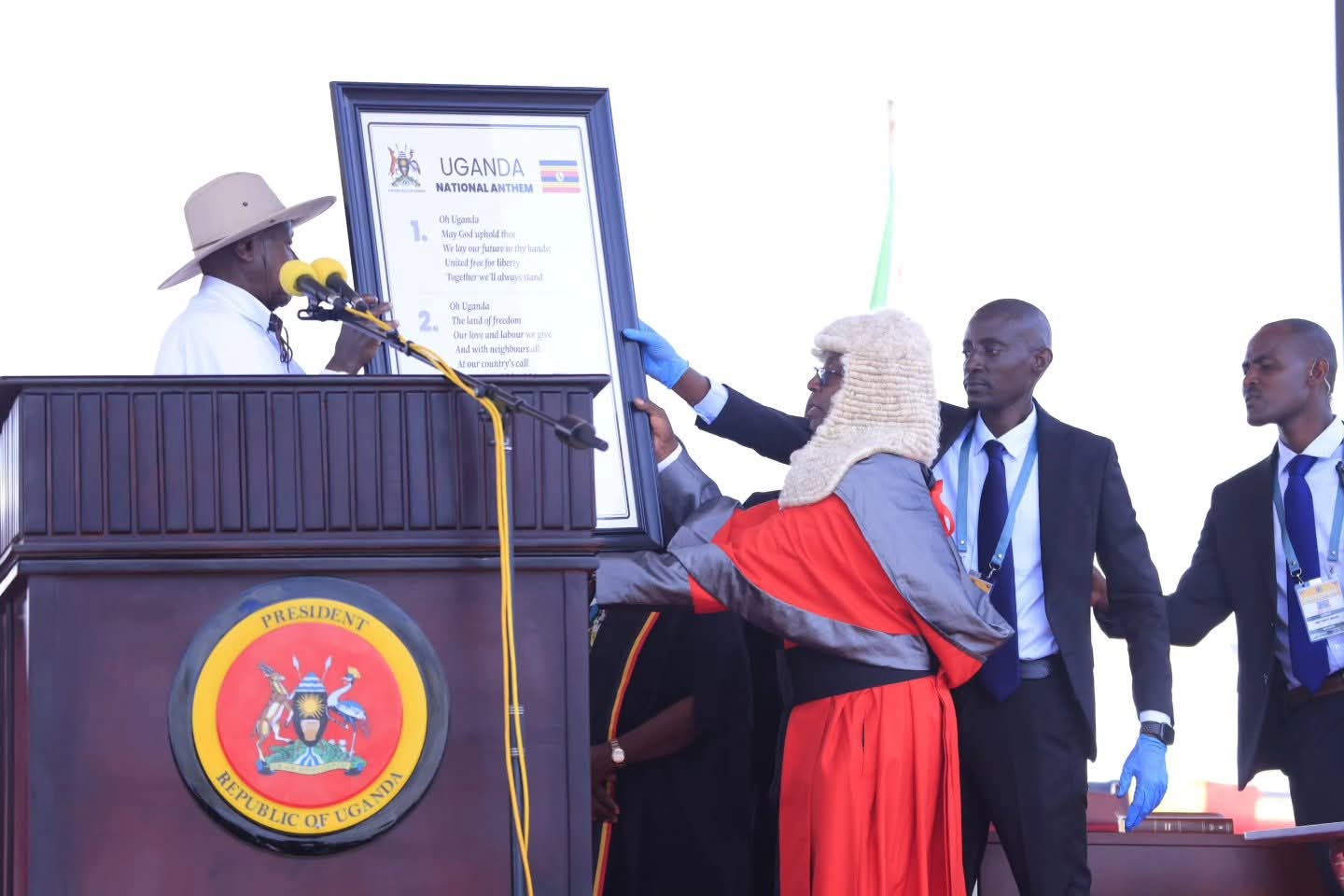
The inauguration ceremony, held at Kololo Ceremonial Grounds, unfolded with elaborate symbolism, constitutional ritual, and military spectacle, reinforcing both continuity and state authority following Museveni’s victory in the January 2026 general election.
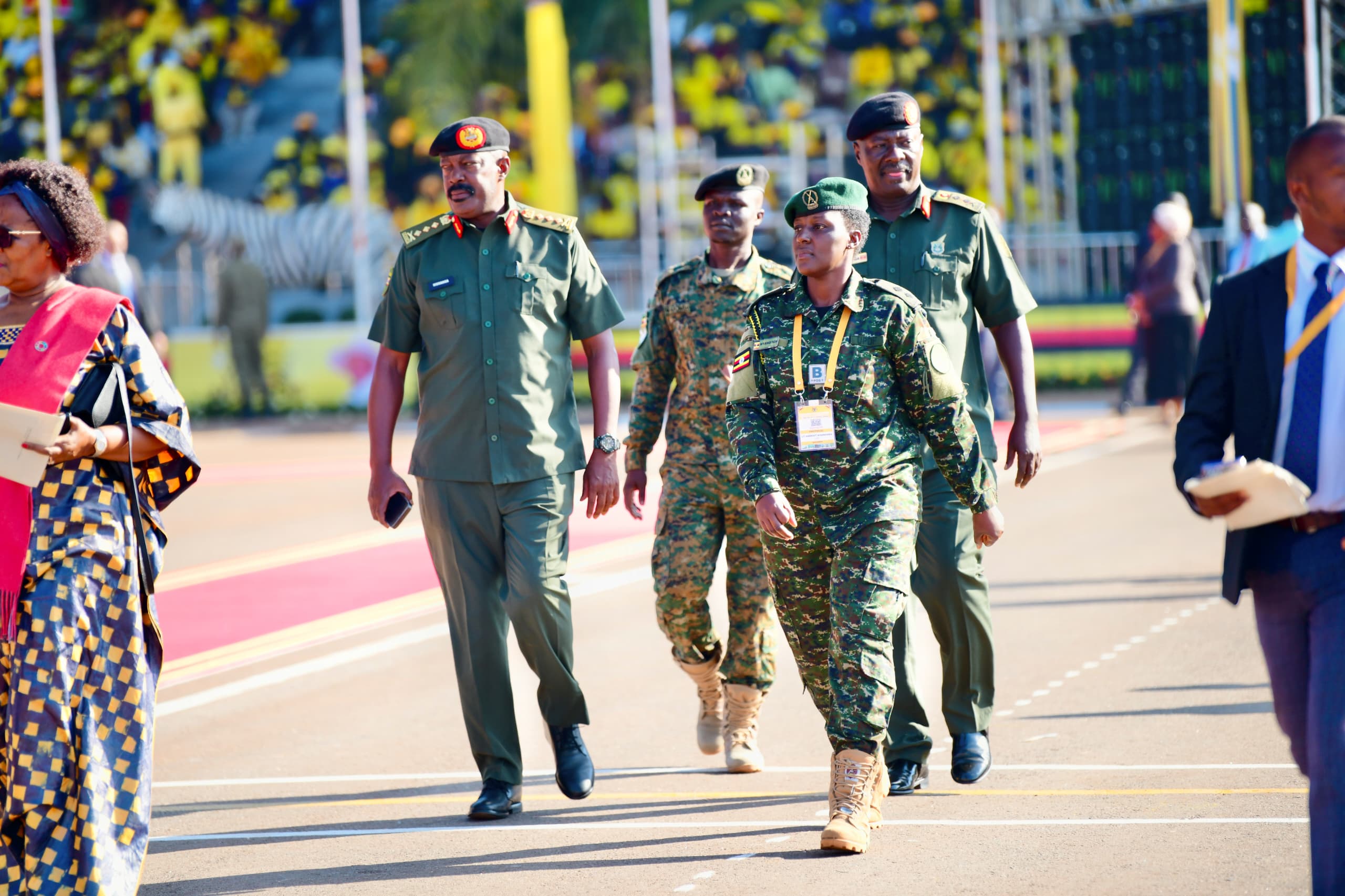
The proceedings began with the arrival of President-elect Museveni, who was received with full military honours before inspecting the guard of honour alongside Gen Muhoozi Kainerugaba. The ceremony reflected the deep intertwining of state protocol and military tradition that has long characterized Uganda’s presidential inaugurations under the ruling National Resistance Movement.
One of the most symbolic moments came with the lowering of the presidential standard flag, formally signaling the conclusion of Museveni’s previous 2021–2026 term before the renewal of executive authority under a fresh mandate.
The event was coordinated by senior state officials including Jessica Alupo, Vincent Bagiire, and Chris Magezi, who served as director of ceremonies.
Electoral Commission Chairperson Simon Byabakama formally declared Museveni winner of the presidential election, in which he defeated seven challengers including Robert Kyagulanyi Ssentamu, popularly known as Bobi Wine.
According to official results, Museveni secured 7,946,772 votes against Kyagulanyi’s 2,741,238 votes, while other candidates including Nathan Nandala Mafabi, Mugisha Muntu, and Mubarak Munyagwa finished significantly behind.
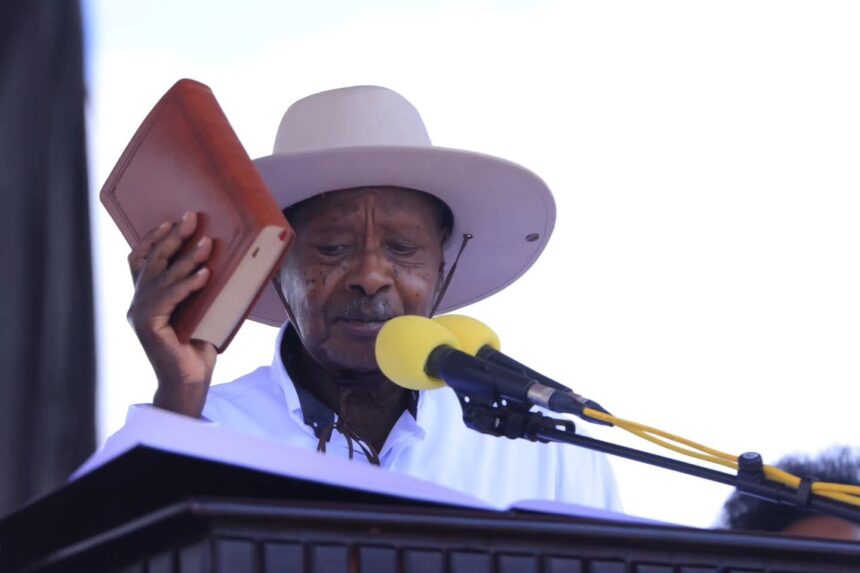
Chief Justice Flavian Nzeija administered both the Oath of Allegiance and the Presidential Oath, after which Museveni pledged to uphold and defend the Constitution of Uganda.
Following the oath-taking, the President received key instruments of state authority, including the Constitution, the national flag, the presidential standard, the coat of arms, and the public seal. Gen Muhoozi later presented Museveni with the shield and sword — traditional symbols representing presidential authority and command of the armed forces.
The ceremony climaxed with the national anthem and a 21-gun salute before Museveni received a formal salute from the security forces and conducted a final inspection of the parade.
Beyond the spectacle, the inauguration underscored Museveni’s enduring political dominance and the continued centrality of the military and state institutions in Uganda’s governance structure. Supporters view his longevity as a source of continuity and stability, while critics continue to raise concerns about democratic competition, political transition, and concentration of power.
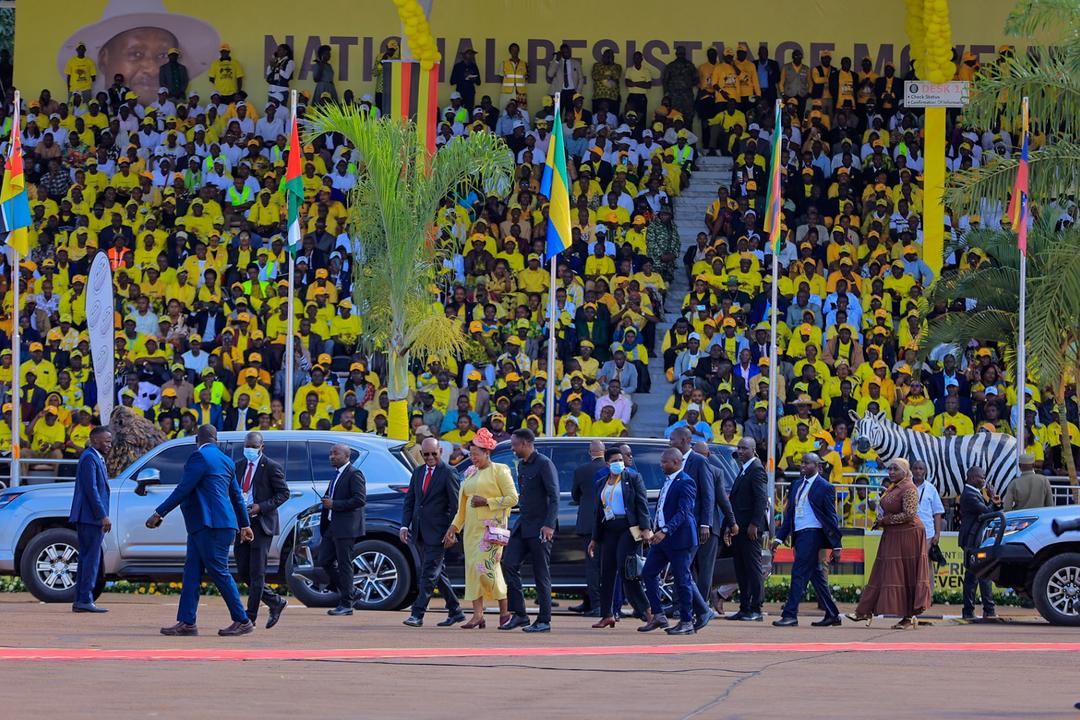
As Uganda enters another five-year term under Museveni’s leadership, attention is expected to shift toward economic management, regional security, governance reforms, and the evolving political role of the next generation within the ruling establishment.