

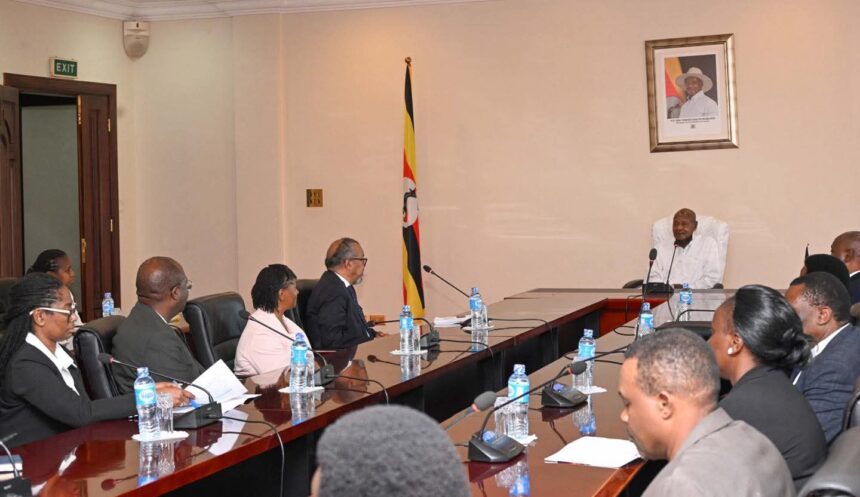
President Yoweri Museveni has met with Tedros Adhanom Ghebreyesus, the Director-General of the World Health Organization, to discuss regional efforts to contain and prevent the spread of Ebola.
The meeting, held at State House Entebbe, focused on strengthening surveillance systems, improving outbreak preparedness, and enhancing response mechanisms as countries in the region remain vigilant against the disease.
During the discussions, President Museveni emphasized the importance of community awareness and early detection of cases, noting that public participation remains a critical component in controlling infectious disease outbreaks.
He also underscored the need for stronger cross-border collaboration among countries in the region, saying coordinated action is essential in preventing the transmission of Ebola across national boundaries.
Drawing from Uganda’s past public health successes, Museveni highlighted the country’s experience in community mobilization during the fight against HIV/AIDS, arguing that similar approaches can help strengthen Ebola prevention and response efforts.
The President reaffirmed Uganda’s commitment to working closely with international partners, including the WHO, to protect public health and enhance regional health security.
“We must continue relying on science, effective leadership, and community involvement to address public health threats,” Museveni said.
Dr. Tedros commended ongoing efforts to strengthen disease surveillance and preparedness, stressing the importance of international cooperation in responding to health emergencies.
The meeting comes at a time when regional health authorities are intensifying measures to prevent further Ebola transmission through enhanced screening, surveillance, contact tracing, and public awareness campaigns.
Health experts have consistently emphasized that rapid detection, effective case management, and strong community engagement remain among the most effective tools in containing Ebola outbreaks.
The engagement between Uganda and the WHO signals continued cooperation aimed at improving emergency preparedness and ensuring that countries in the region are better equipped to respond to current and future public health challenges.