


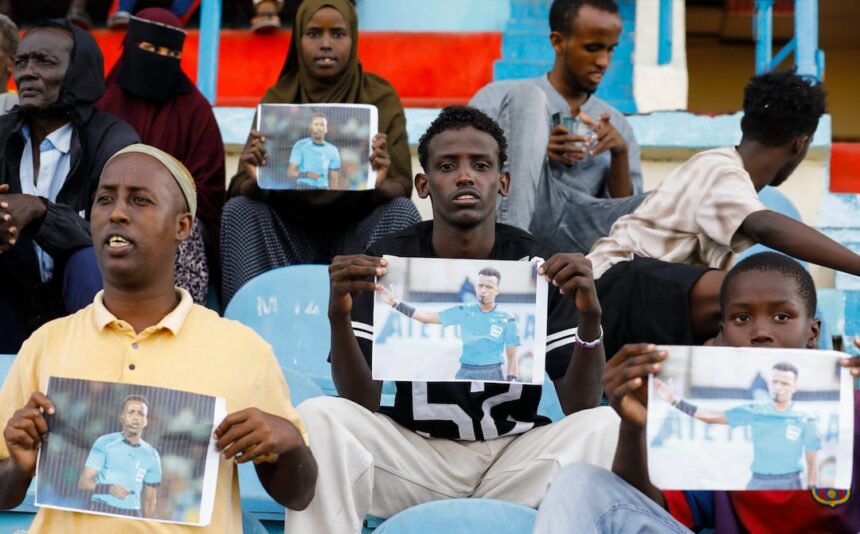
The 2026 FIFA World Cup is facing fresh controversy after Somali referee Omar Abdulkadir Artan was denied entry into the United States despite being selected to officiate at the tournament, while reports indicate that nearly 180,000 match tickets have appeared on official resale platforms ahead of kickoff.
Artan, who was set to become the first Somali referee to officiate at a FIFA World Cup, arrived at Miami International Airport with a valid visa and FIFA accreditation but was denied entry following an 11-hour screening process by U.S. authorities. U.S. Customs and Border Protection said he was found inadmissible due to unspecified “vetting concerns.
FIFA subsequently confirmed that Artan would not be able to participate in the tournament because all World Cup referees are required to undergo centralized training in the United States before taking charge of matches. The governing body stressed that immigration decisions are solely the responsibility of host governments.
The decision has sparked criticism from Somali officials, who described the move as a setback for fairness and merit in international football. Artan, who was named Africa’s Referee of the Year in 2025, had been widely celebrated as a symbol of progress for Somali sport.
Meanwhile, separate reports suggest that demand for some World Cup matches has fallen below expectations, with approximately 180,000 tickets listed on resale platforms across the United States, Canada, and Mexico. Analysts point to high ticket prices and FIFA’s dynamic pricing system as major factors affecting sales.
Some matches, including several group-stage fixtures, still have thousands of tickets available, prompting concerns about the possibility of visible empty seats during parts of the tournament. However, the figure represents a relatively small proportion of the millions of tickets available across the expanded 104-match competition.
The developments have fueled debate over accessibility, immigration policies, and the overall organization of the first 48-team FIFA World Cup, which is being jointly hosted by the United States, Canada, and Mexico. Critics argue that visa restrictions and high ticket costs risk undermining the tournament’s reputation as a global celebration of football, while organizers maintain that the competition will remain one of the largest sporting events ever staged.