

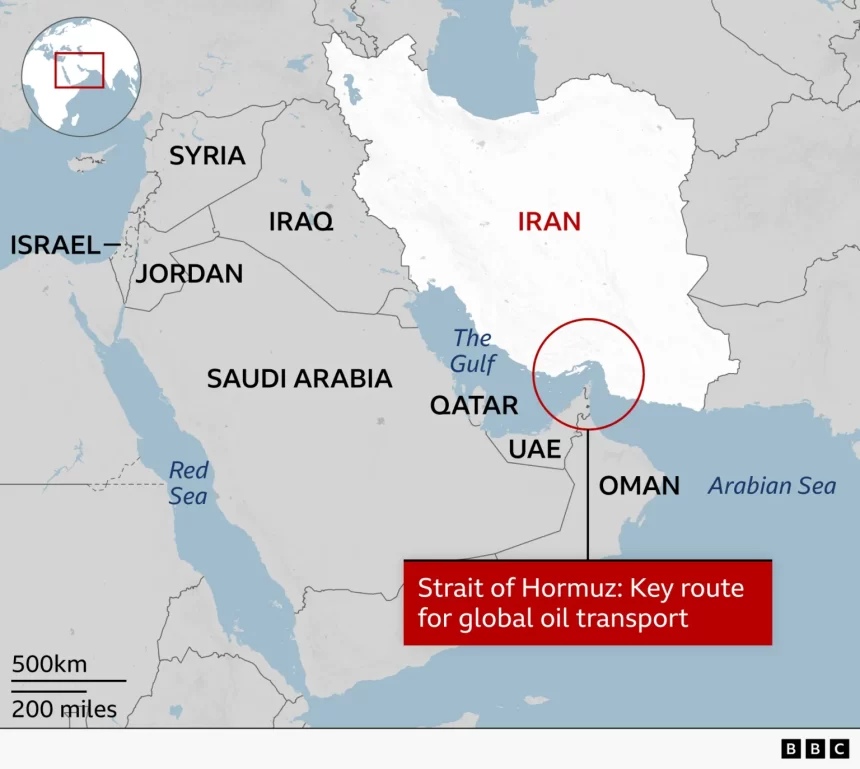
Iran has once again shut down the Strait of Hormuz, warning that any commercial vessel attempting to pass through the vital waterway will be targeted marking a sharp escalation in its standoff with the United States.
The move comes just a day after Tehran had announced a temporary reopening of the strait, a key global transit corridor. However, the Islamic Revolutionary Guard Corps (IRGC) reversed course, citing what it described as a continued U.S. naval blockade of Iranian ports.
No vessel should leave anchorage in the Persian Gulf or Sea of Oman
Any ship approaching the strait would be treated as cooperating with the enemy
Violators risk being directly targeted
U.S. rejects Iran’s warning
U.S. President Donald Trump dismissed Iran’s actions, saying Tehran cannot “blackmail” Washington by threatening one of the world’s most critical shipping lanes.
The United States has maintained a naval blockade of Iranian ports since mid-April, stating it will continue until a broader peace agreement is reached. According to U.S. officials, dozens of vessels have already been turned away as part of enforcement measures.
Reports of attacks on vessels
The latest escalation has been accompanied by multiple incidents at sea:
Iranian gunboats reportedly opened fire on a tanker transiting the strait
A container ship was struck by an unidentified projectile near Oman
At least two merchant vessels reported being hit by gunfire
The developments have raised alarm among global shipping operators and governments alike, with India summoning Iran’s ambassador after two of its flagged vessels were caught in the incidents.
The closure casts serious doubt on the fragile ceasefire currently in place between Iran and the U.S., which is set to expire on April 22.
Iran’s Supreme National Security Council accused Washington of violating the ceasefire through its blockade, insisting that reopening the strait is impossible under current conditions.
Meanwhile, diplomatic efforts remain uncertain. Tehran confirmed it is reviewing new U.S. proposals but has yet to respond, after earlier peace talks failed to produce an agreement.
The repeated disruption of traffic through the Strait of Hormuz through which a significant portion of the world’s oil supply passes has already sent global energy prices soaring and threatens further instability in international markets.
With tensions rising and military posturing intensifying, the situation remains volatile, and the risk of a broader regional conflict continues to grow.