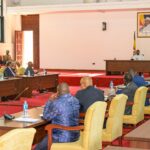


Yoweri Kaguta Museveni has assented to the Protection of Sovereignty Act, 2026, officially turning the controversial legislation into law after it was recently passed by Parliament of Uganda.
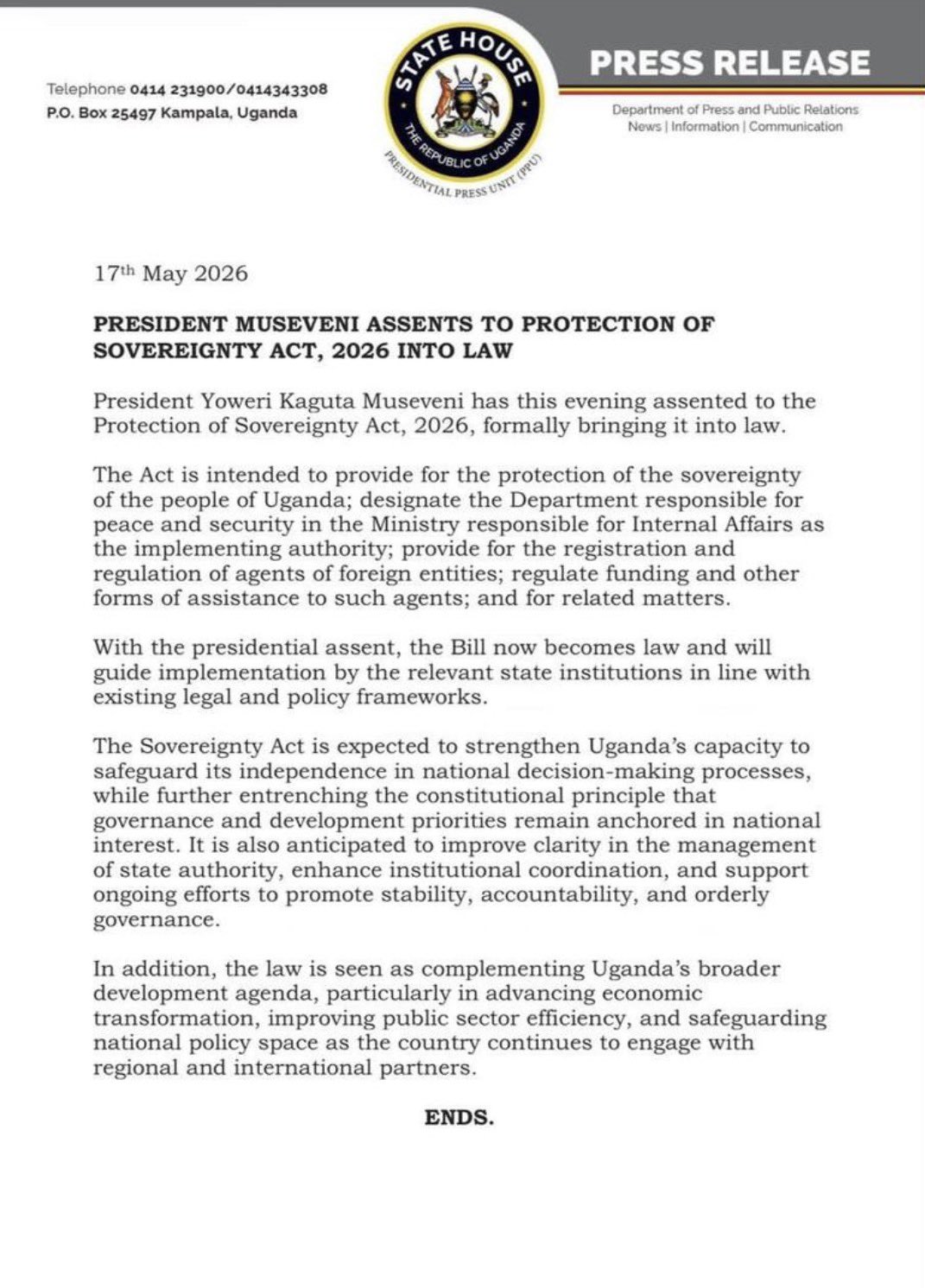
According to government officials, the new law is intended to protect Uganda’s sovereignty by regulating and preventing what authorities describe as unlawful foreign interference in the country’s political, security, and economic affairs.
The government says the Act is designed to strengthen national independence while safeguarding legitimate foreign activities such as investment, trade, humanitarian work, religious support, academic partnerships, and development cooperation.
The law has, however, generated intense national debate in recent weeks, with supporters arguing that Uganda must protect itself from external influence in domestic affairs, while critics warn that some provisions could undermine constitutional freedoms, discourage foreign investment, and restrict civil society operations.
Among the most debated provisions was a clause requiring approval for certain foreign financial or material support exceeding a specified threshold, a measure opponents argued could create administrative bottlenecks and negatively affect economic activity.
Senior government officials, including central bank leaders and legal experts, had earlier expressed concerns about possible effects on capital inflows, investment confidence, and Uganda’s balance of payments if implementation is not carefully managed.
Supporters of the law, including members of the ruling National Resistance Movement, maintain that the legislation is necessary to shield Uganda from foreign political manipulation and external interference in national affairs.
The assent now sets the stage for implementation of the law, with attention expected to shift toward how government agencies will enforce its provisions and whether any legal challenges will be filed in court by opponents of the legislation.