
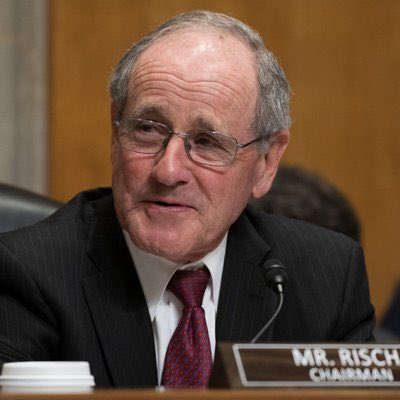
The United States has intensified pressure on Uganda after a senior American lawmaker sharply rebuked Chief of Defence Forces General Muhoozi Kainerugaba over a series of controversial social media posts, raising the prospect of a reassessment of bilateral security cooperation.
In a strongly worded statement posted on X, Senator Jim Risch, the Republican chairman of the US Senate Foreign Relations Committee, said General Muhoozi had “crossed a red line” with remarks that he said could undermine trust and endanger US interests in the region. Risch warned that an apology alone was insufficient to repair the damage.
“Commander Muhoozi Kainerugaba has crossed a red line and now the U.S. must reevaluate its security partnership, which includes sanctions and military cooperation with Uganda,” Risch wrote, describing the comments as reckless and destabilising.
The warning followed a series of now-deleted posts by the Ugandan military chief in which he accused officials at the US Embassy in Kampala of helping opposition leader Robert Kyagulanyi, popularly known as Bobi Wine, evade Ugandan security forces.
The allegations sparked concern in Washington, given Uganda’s long-standing role as a key US security partner in East Africa.
General Muhoozi later issued an apology, saying the posts were based on incorrect information and that he had since spoken with the US ambassador. He sought to downplay the fallout, insisting that cooperation between the two countries’ militaries would continue uninterrupted.
“I want to apologise to our great friends the United States for my earlier tweets that I have now deleted… everything is okay. We are going to continue our military cooperation as usual,” Muhoozi wrote.
However, Senator Risch and other US officials signalled that the matter goes beyond a single apology. Risch said the incident reflected deeper concerns about diplomatic conduct, accountability and the tone adopted by Uganda’s senior military leadership.
“The president’s son and likely successor cannot just delete tweets and issue hollow apologies,” he said, suggesting that continued provocative behaviour could trigger targeted sanctions against Ugandan officials.
The senator has urged US policymakers to reconsider Uganda’s participation in joint security initiatives, including peacekeeping missions and counterterrorism cooperation. Such a move would mark a significant shift in relations, given Uganda’s central role in regional security efforts, particularly in Somalia under the African Union mission.
Uganda has for years been viewed in Washington as a reliable ally in combating terrorism and promoting stability in the Horn of Africa and the Great Lakes region. But analysts say the latest dispute highlights growing unease among US lawmakers over political and military developments in Kampala.
For now, diplomatic channels remain open, but the episode has injected new uncertainty into US–Uganda relations, with Washington making clear that future cooperation will depend not only on shared security interests but also on restraint and responsibility at the highest levels of Uganda’s leadership.