
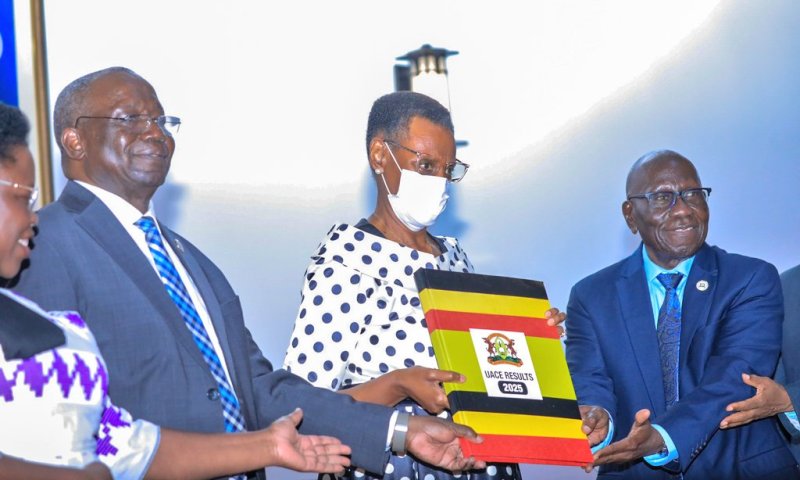
The Uganda National Examinations Board has announced a remarkable performance in the 2025 Uganda Advanced Certificate of Education results, revealing that 98.9% of candidates qualified for the award of the certificate.
The results were officially released on Friday by UNEB Executive Director Dan Odongo, who said the performance reflects continued growth in advanced secondary education across the country.
According to the board, the results bring encouraging prospects for university admissions. If the current minimum requirement of two Principal level passes for admission to Ugandan universities is maintained, 113,291 candidates (68.6%) will qualify for degree programs.
This marks a significant increase compared to 2024, when 92,273 candidates (65.5%) met the same criteria. Officials estimate that universities may need to create about 21,018 additional places to accommodate the growing number of qualified students.
The results also indicate strong prospects for technical and vocational training. UNEB reports that 145,129 candidates (87.9%) obtained at least one Principal pass and two Subsidiary passes, making them eligible for admission to Technical and Vocational Education and Training institutions and other tertiary diploma programs.
Rising Demand for Higher Education
UNEB data shows a significant increase in the number of students pursuing advanced secondary education in Uganda.
A total of 166,400 candidates registered for the 2025 examinations, representing a 17.2% increase compared to the previous year. The number of examination centers also grew to 2,452, up from 2,255 in 2024, reflecting the expanding reach of A-Level education nationwide.
The Universal Post O-Level Education and Training (UPOLET) program also recorded increased participation, with 42,327 students enrolled, accounting for more than a quarter of the total candidates.
Gender Participation
Male candidates continued to make up the majority of the candidates sitting the exams, representing 56.2% of the total. Out of the 165,172 candidates who actually sat for the examinations, 72,374 (43.8%) were female.
Under the UPOLET program specifically, 15,733 female students were registered, representing nearly 10% of the national candidature. Education officials say the numbers demonstrate the growing impact of government programs aimed at improving access to advanced education, particularly for girls.
Education stakeholders say the record performance not only highlights academic progress but also underscores the need for expanded capacity in universities and tertiary institutions to absorb the rising number of qualified students.