
At least four presidential appointees did not take the oath of office during Mondays’ swearing-in ceremony for Uganda’s new Cabinet and Ministers of State, raising questions about their eligibility to assume office.
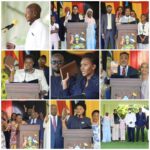
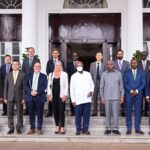
More than 78 ministers, including the Vice President and Prime Minister, were sworn in at State House Entebbe after being vetted and approved by Parliament’s Appointments Committee ahead of the 2026–2031 government term.
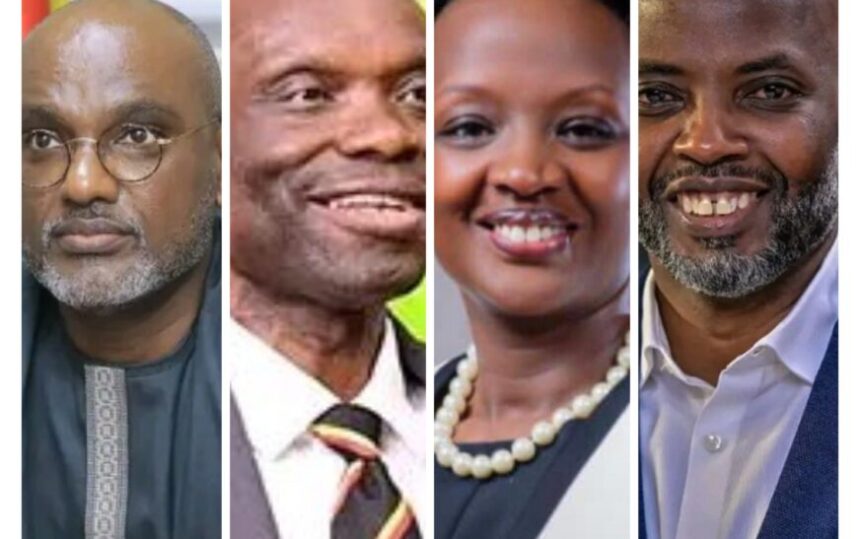
However, Daily Star has established that four ministerial nominees were absent from the ceremony, largely due to concerns relating to dual citizenship.
The affected appointees include Adonia Ayebare, Lawrence Muganga, Calvin Echodu, and Shartsi Kutesa Musherure.
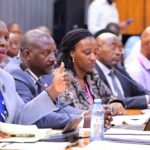
Last week, Parliament’s Appointments Committee, chaired by Jacob Oboth-Oboth and deputised by Thomas Tayebwa, vetted the presidential nominees following their appointment by President Yoweri Kaguta Museveni on May 26, 2026.
Speaking after the vetting process, Tayebwa revealed that First Lady Janet Kataaha Museveni had not yet appeared before the committee and would do so at a later date. He also disclosed that Muganga’s nomination had attracted scrutiny over concerns regarding dual citizenship.
Sources within Parliament indicated that nominees flagged on citizenship matters are required to clarify their status before they can be approved and sworn in. Uganda’s Constitution restricts holders of certain public offices from maintaining allegiance to another country, making citizenship verification a critical component of the vetting process.
The absence of the four appointees means that key ministerial portfolios remain temporarily unoccupied, potentially delaying administrative decisions and policy implementation in the affected ministries.
Government officials familiar with the process said the nominees would only assume office after satisfying all constitutional and legal requirements and receiving the necessary clearance from Parliament.
The development underscored the increasingly rigorous role of Parliament’s Appointments Committee, which in recent years has intensified scrutiny of presidential nominees on issues ranging from academic qualifications and integrity to citizenship status.
Political analysts noted that the committee’s firm approach reflects growing efforts to strengthen accountability and ensure that individuals appointed to high public office fully comply with constitutional provisions before taking up their duties.
For now, the four ministerial dockets remain in limbo as the affected nominees work to resolve the issues raised during the vetting process.