
Burkina Faso’s transitional legislative assembly has approved a far-reaching new law on religious freedoms that will require all imams, pastors, and other religious leaders to obtain state-recognized certification before leading places of worship.
The legislation, which spans more than 100 articles across six chapters, introduces a new national regulatory framework aimed at overseeing religious activities in the country. Under the law, individuals seeking to lead mosques, churches, or other religious institutions will be required to undergo training and obtain qualifications recognized by the state.
The new law also mandates that all religious associations affiliate with officially recognized umbrella organizations approved by the government. In addition, public officials will be prohibited from engaging in religious proselytization while carrying out official duties.
Authorities have also introduced strict penalties against religious hate speech and incitement. Individuals found guilty could face prison sentences of up to seven years and fines of up to 10 million CFA francs.
Government officials say the reforms are intended to strengthen national unity, reinforce the country’s secular constitutional order, and address what they describe as deviations in religious practice at a time when Burkina Faso continues to battle a prolonged insurgency and security crisis.
According to supporters of the legislation, the measures will help prevent the misuse of religious platforms to spread extremism, division, and violence while promoting greater accountability among religious leaders.
However, the law has generated significant controversy among some religious groups, particularly within sections of the Sunni Muslim community, where critics argue that the state is interfering excessively in religious affairs.
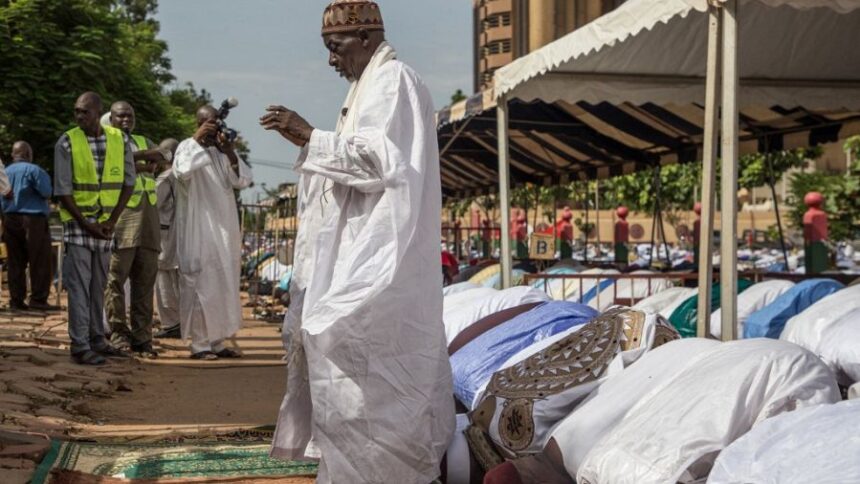
Opposition to the bill intensified in recent months after the arrest of an imam who publicly criticized the proposed legislation. The incident sparked protests in the capital, Ouagadougou, prompting authorities to temporarily close the city’s Grand Mosque amid rising tensions.
Critics contend that requiring government certification for religious leaders could undermine religious independence and grant authorities excessive control over matters of faith. Some religious leaders have warned that the law may set a precedent for state interference in internal religious affairs.
The legislation now awaits the signature of transitional President Ibrahim Traoré before it can be formally enacted and published in the official government gazette.
The development comes as Burkina Faso continues efforts to strengthen state institutions and address security challenges linked to armed insurgent groups operating in parts of the country.
Political analysts say the law is likely to remain a subject of intense national debate, with supporters viewing it as a tool for stability and social cohesion, while opponents see it as a potential threat to religious freedom and autonomy.
Once signed into law, Burkina Faso will join a number of countries that maintain formal state oversight of religious leadership and institutions, a move that could reshape the relationship between government and religious communities for years to come.