
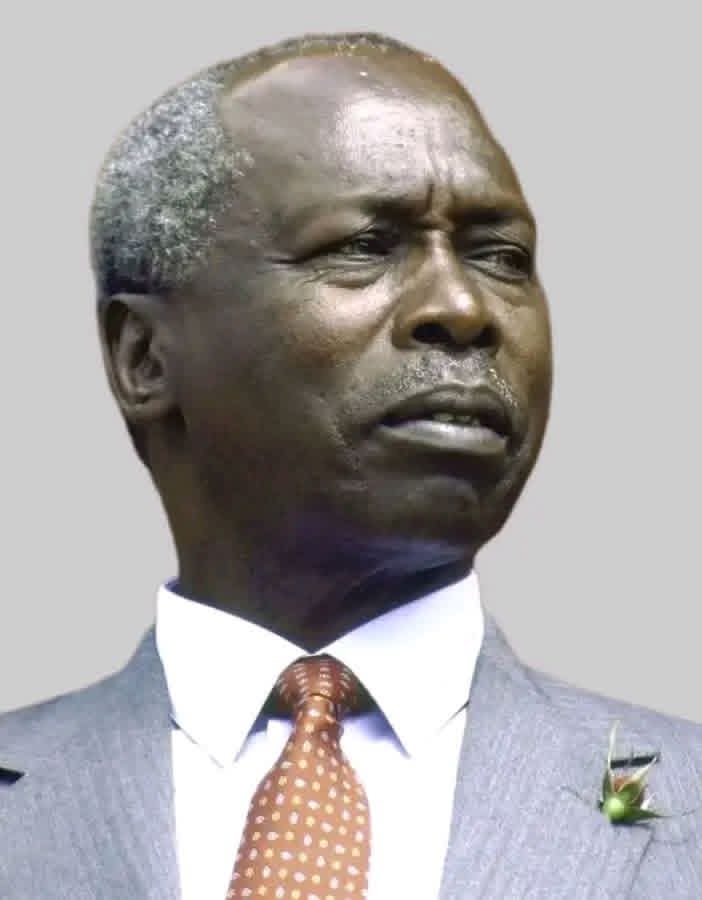
The late former Kenyan President Daniel arap Moi is increasingly being remembered for a political strategy that prioritized loyalty and personal allegiance over academic qualifications, a model that helped him maintain power for 24 years but remains the subject of debate among historians and political analysts.
Political observers argue that during his tenure, Moi cultivated a network of fiercely loyal grassroots mobilizers and regional power brokers who became instrumental in enforcing the ruling Kenya African National Union agenda and countering opposition influence across the country.
Among the most prominent of these figures was Kariuki Chotara, a powerful political operative in Nakuru who became known for mobilizing KANU youth groups and defending Moi’s political interests in the Rift Valley region.
At the Coast, Moi relied heavily on Shariff Nassir, a vocal ally whose influence and political networks helped consolidate support for the ruling establishment. Nassir became known for his unwavering defense of the President and frequent attacks on government critics.
In the Rift Valley, Ezekiel Barngetuny emerged as one of Moi’s most loyal lieutenants, often championing government positions and rallying support for the President among local communities.
Meanwhile, in the Ukambani region, Mulu Mutisya played a key role in maintaining political support through local networks and community mobilization efforts.
Analysts say many of these influential figures shared one defining characteristic: their political survival depended largely on their relationship with Moi, making them reliable allies in a political system built around patronage and loyalty.
“Moi understood that loyalty was often more valuable than credentials when it came to maintaining political control,” said one Nairobi-based political analyst. “Many of his closest allies derived their influence directly from him and therefore had little incentive to challenge his authority.”
However, historians caution against portraying Moi’s administration as entirely anti-intellectual. Throughout his presidency, Kenya’s government also included highly educated technocrats, economists, diplomats, and senior civil servants who managed key state institutions and policy sectors.
The debate over Moi’s leadership style continues decades after his presidency, with critics arguing that the patronage system weakened democratic institutions, while supporters maintain it helped preserve political stability during a turbulent period in Kenya’s history.
Moi served as Kenya’s president from 1978 to 2002, becoming one of Africa’s longest-serving leaders. His political legacy remains complex, marked by both economic and social development initiatives as well as persistent criticism over governance, political repression, and the concentration of power around loyalist networks.
Today, scholars continue to examine how his reliance on trusted political operatives shaped Kenya’s political landscape and influenced the country’s transition to multiparty democracy.