


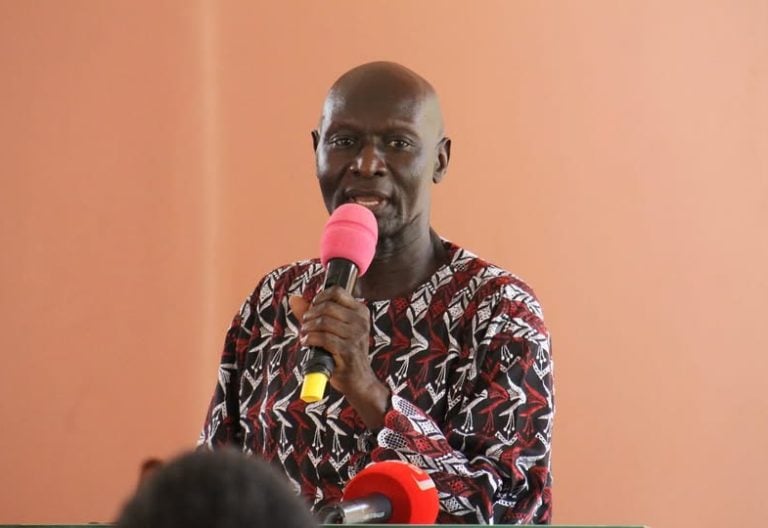
The Government of Uganda has officially nominated veteran diplomat Ambassador Olara Otunnu for the position of Secretary-General of the United Nations, calling on UN member states to support his candidature as the global body prepares to elect a successor to António Guterres.
In a statement issued on July 26, 2026, the Permanent Secretary in the Ministry of Foreign Affairs, Vincent Bagiire Waiswa, announced that Uganda had formally submitted Otunnu’s nomination, describing him as a distinguished diplomat whose career spans more than four decades in international diplomacy, public service, academia and peacebuilding.
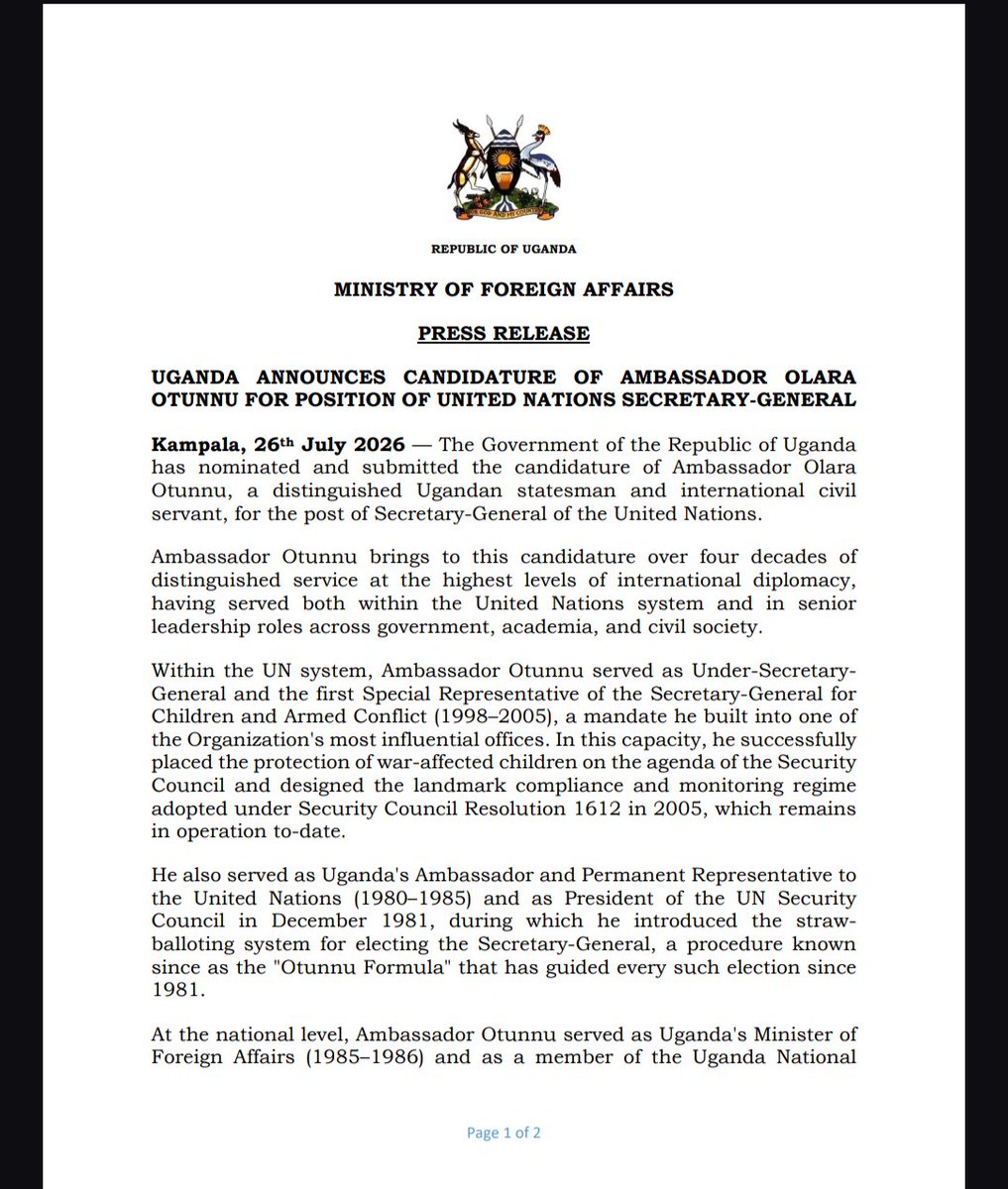

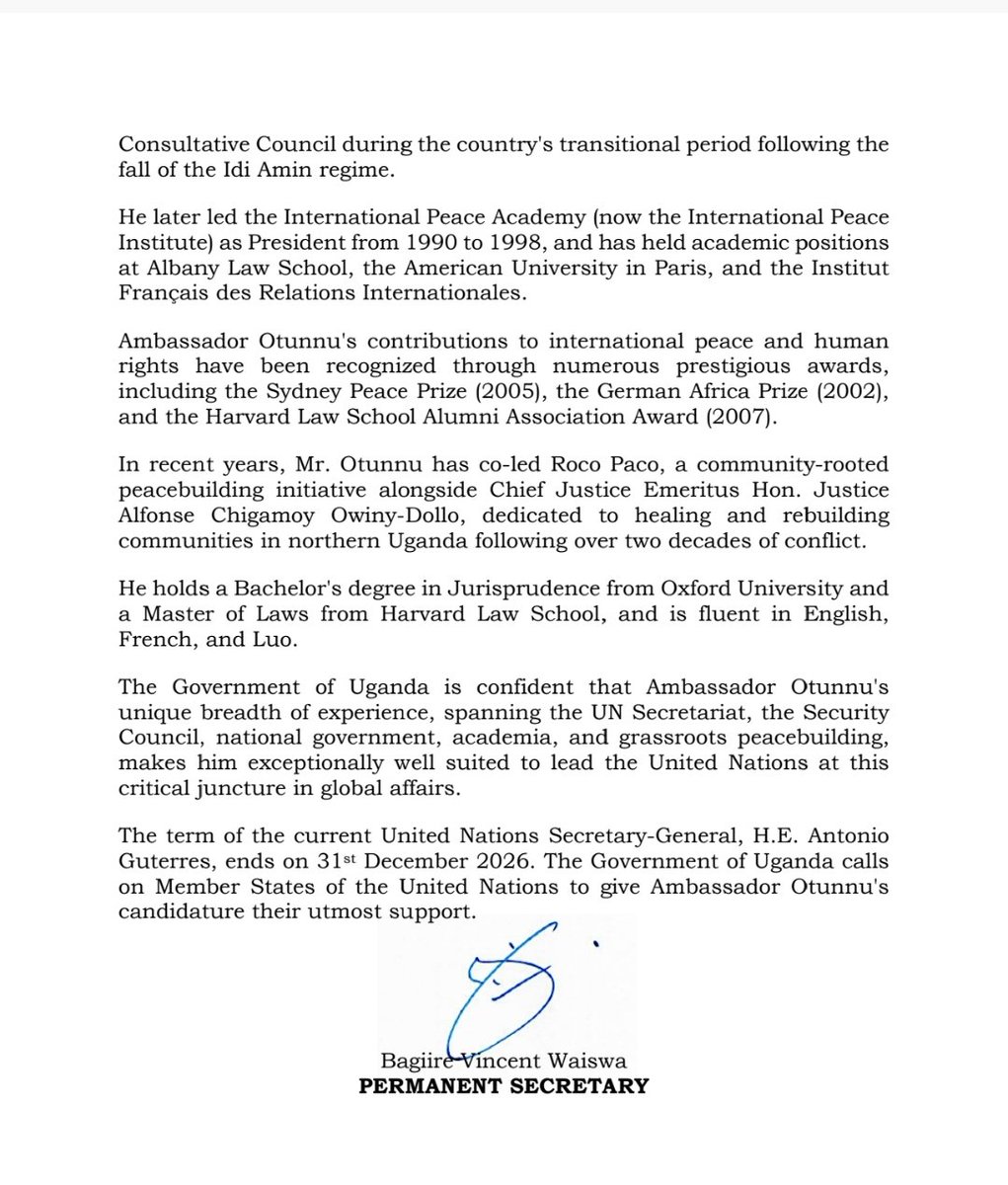

If elected, Otunnu would succeed António Guterres, whose second and final term as UN Secretary-General ends on December 31, 2026.
According to the government, Otunnu possesses the leadership, experience and global outlook needed to steer the United Nations at a time when the world is facing complex challenges, including armed conflicts, humanitarian crises, climate change and geopolitical tensions.
Otunnu is widely recognised for his long service within the United Nations. From 1998 to 2005, he served as United Nations Under-Secretary-General and became the first Special Representative of the Secretary-General for Children and Armed Conflict, where he championed the protection of children affected by war.
During his tenure, he successfully placed the issue of children in armed conflict on the agenda of the UN Security Council and played a leading role in establishing the monitoring and reporting mechanism under Security Council Resolution 1612, which remains a key international framework for protecting children in conflict zones.
His relationship with the United Nations dates back even earlier. Between 1980 and 1985, Otunnu served as Uganda’s Ambassador and Permanent Representative to the United Nations.
While serving as President of the UN Security Council in December 1981, he introduced the now-famous “Otunnu Formula”—a straw-balloting system used to build consensus during the election of the UN Secretary-General. The procedure has since become the standard method used in selecting the holder of the world’s top diplomatic office.
At the national level, Otunnu served as Uganda’s Minister of Foreign Affairs between 1985 and 1986 and was also a member of the Uganda National Consultative Council, which guided the country’s political transition following the fall of the Idi Amin regime.
Beyond government service, Otunnu has made significant contributions to international peacebuilding and academia. He served as President of the International Peace Academy, now known as the International Peace Institute, from 1990 to 1998, and has lectured at institutions including Albany Law School, the American University in Paris, and the Institut Français des Relations Internationales.
His work has earned him several international honours, including the Sydney Peace Prize, the German Africa Prize, and the Harvard Law School Alumni Association Award.
More recently, Otunnu has co-led the Roco Paco peacebuilding initiative alongside Chief Justice Emeritus Alfonse Chigamoy Owiny-Dollo, promoting reconciliation, healing and community rebuilding in northern Uganda following years of armed conflict.
An accomplished scholar, Otunnu holds a Bachelor’s Degree in Jurisprudence from Oxford University and a Master of Laws (LLM) from Harvard Law School. He is fluent in English, French and Luo.
The Government of Uganda said Otunnu’s unique combination of experience in the UN Secretariat, the Security Council, national government, academia and grassroots peacebuilding makes him well suited to lead the United Nations during an increasingly uncertain global environment.
Uganda has appealed to all UN member states to support Ambassador Otunnu’s candidature as the process of selecting the next UN Secretary-General gathers momentum ahead of the conclusion of António Guterres’ term later this year.