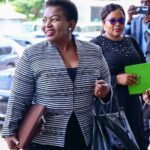

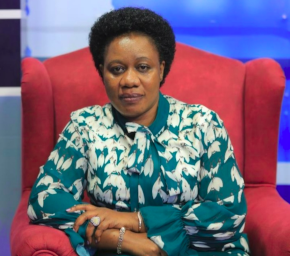
The Executive Director of the Centre for Constitutional Governance (CCG), Sarah Bireete, has been formally charged with unlawfully obtaining and disclosing voters’ personal information, weeks after her arrest ignited national debate over civil liberties and election monitoring.
Bireete appeared before the Buganda Road Chief Magistrate’s Court on Friday, January 2, 2026, where prosecutors accused her of accessing and sharing sensitive voter data without authorization from the Electoral Commission (EC).
According to the charge sheet filed under Police Form 53 (Ref: CPS K’LA CRB 003/2026), Bireete and other suspects still at large allegedly obtained or disclosed National Voter Information between January and December 2025 in Kampala, Mukono and Wakiso districts. The offence is said to contravene Sections 35 (1) and (2) of the Data Protection and Privacy Act, Cap 97.
Court documents state that the information was accessed or shared without the consent of the Electoral Commission, the legally mandated custodian of Uganda’s voter register.
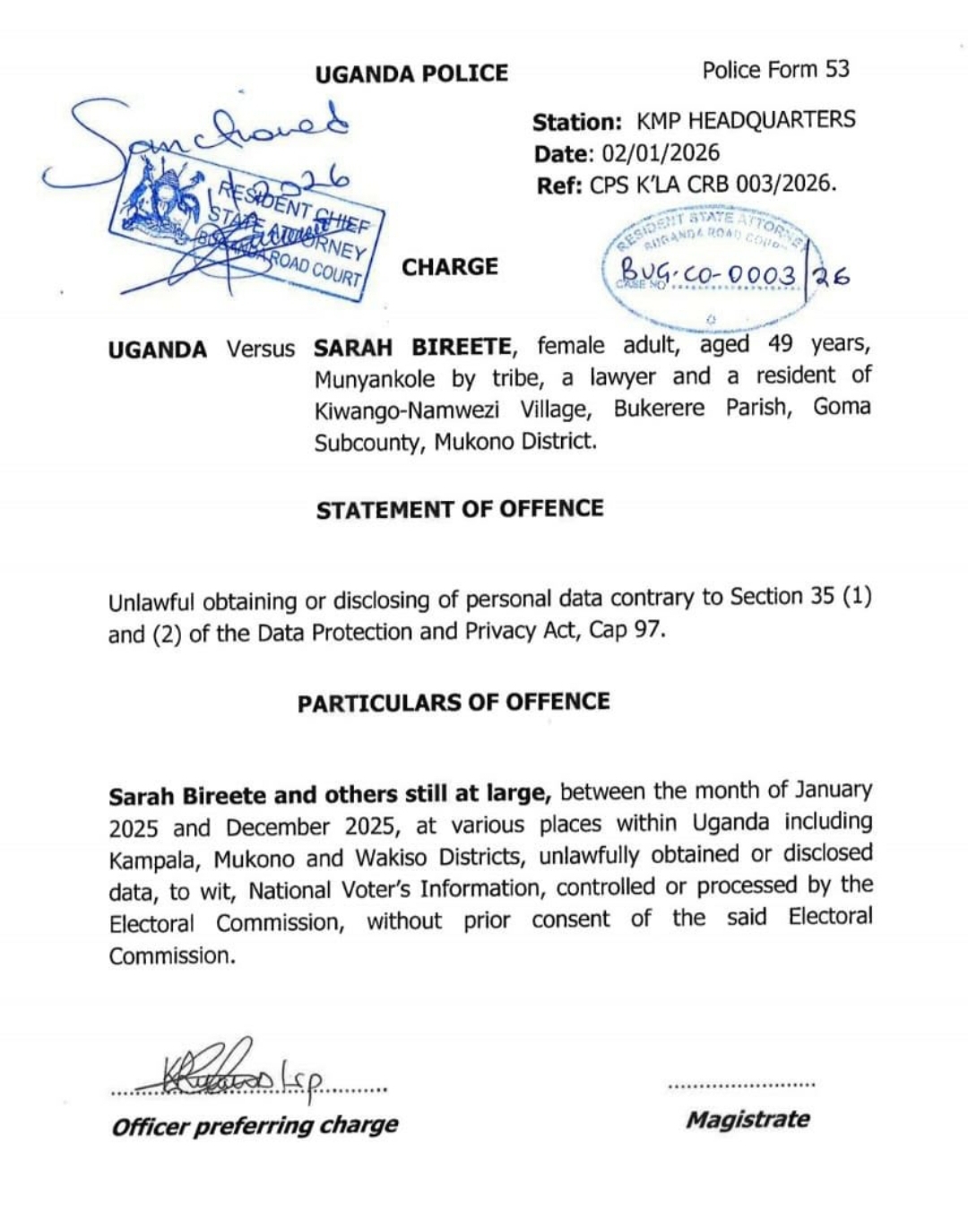
Bireete, 49, a resident of Kiwango-Namwezi Village in Bukerere Parish, Goma Sub-county, Mukono District, was arrested at her home on December 30, 2025, by officers from Kampala Metropolitan Police. Her arrest came amid intensified scrutiny of civil society organisations involved in election observation ahead of the January 15 general elections.
Prosecutors have not yet detailed the specific nature of the data allegedly accessed or how it was used, but the case has already raised questions about the boundaries between election monitoring, data protection laws and state oversight.
By press time, Bireete’s legal team had not issued a public response to the charges. The court is expected to address bail and other procedural matters at her next appearance.
Bireete is a lawyer and a seasoned election observer who chairs both the East and Horn of Africa Election Observers Network and the Global Network of Domestic Election Monitors. She has been a prominent voice on electoral transparency, governance and constitutionalism in Uganda and across the region.
Her arrest and subsequent charging have triggered renewed debate among legal experts, civil society actors and political observers over the role of election observers in accessing electoral data, and whether existing laws adequately balance privacy concerns with the need for transparency during electoral processes.