
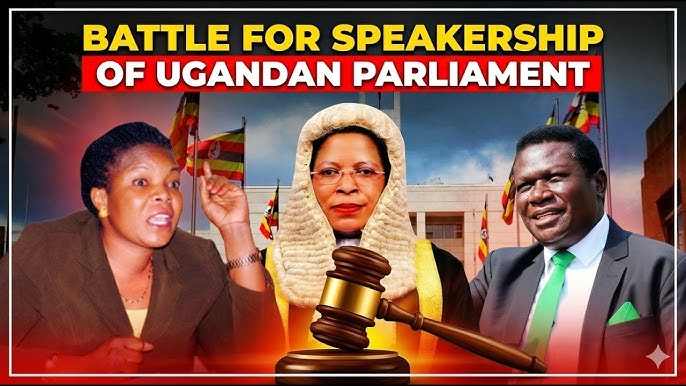
As Uganda inches closer to the opening of the 12th Parliament, the battle for the Speaker’s chair has once again exposed a deeper national conversation — one that goes beyond personalities and party colors to touch the very architecture of power, regional balance and political survival.
The incumbent, Anita Annet Among, is not walking into May unchallenged. Five contenders — Norbert Mao, Asiimwe Akiiki Deborah, Persis Namuganza, Alion Godfrey, and Lydia Wanyoto — have declared interest in unseating her. On the surface, it is a routine contest for a constitutional office. Beneath it, however, lies a historical tug-of-war that has defined Uganda’s political trajectory since independence in 1962.
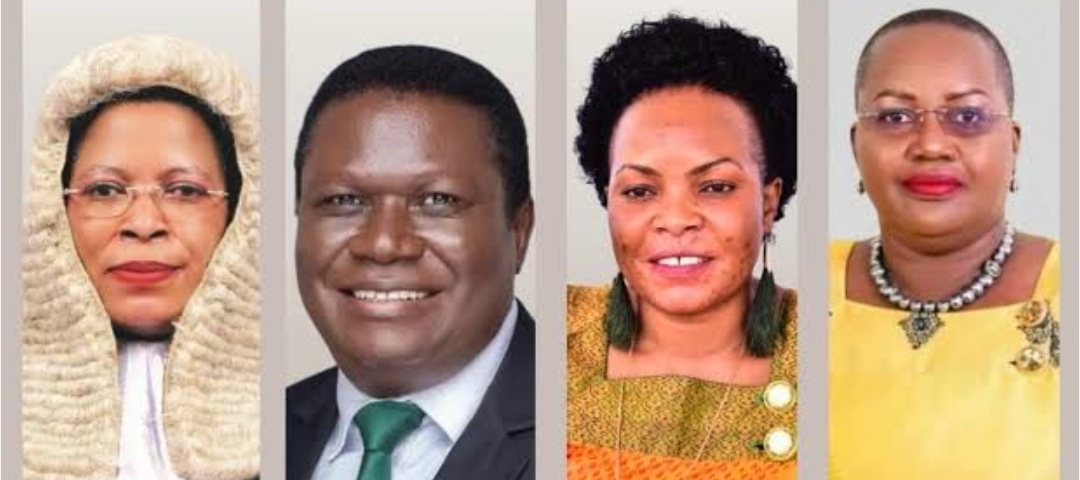
The speakership has never been just a ceremonial gavel and robe. It is the pivot around which legislative power rotates. In Uganda’s political history, Speakers have shaped — and in some cases shaken — regimes. From the early post-independence years under Sir John Bowes Griffin to the tumultuous 1966 crisis during the tenure of Narendra Patel, the office has mirrored the country’s instability and ambition.
The third Parliament under Prof. Edward Rugumayo remains perhaps the most instructive episode. That legislature demonstrated that Parliament, under a determined Speaker, could move beyond rubber-stamping executive decisions. The vote of no confidence against President Yusuf Lule in 1979 still echoes in the corridors of power. It was a stark reminder that a bold Parliament can unseat a government.
Fast-forward to the NRM era, and the speakership has often been intertwined with constitutional turning points. Under Edward Kiwanuka Ssekandi, the removal of presidential term limits in 2005 passed through Parliament, fundamentally altering Uganda’s political future. Later, under Rebecca Alitwala Kadaga, the controversial age-limit amendment was passed amid chaotic scenes that saw MPs physically ejected from the chamber.
Each era tells a similar story: the Speaker’s chair is not neutral ground. It is strategic terrain.
Today’s race reflects that same intensity. Uganda is widely perceived to be approaching a sensitive political transition phase. In such moments, Parliament becomes more than a lawmaking body; it becomes the theatre where succession, accountability and national direction are negotiated.
For President Yoweri Museveni, the speakership is no trivial matter. History has shown that a cooperative Speaker can smooth executive ambitions, while an independent one can complicate them. That is why speculation persists that the presidency is watching the race closely, mindful of both regional arithmetic and political loyalty.
The regional undertone cannot be ignored. Since 1962, the office has rotated across Eastern, Western, Northern and Buganda regions. Every contest subtly revives the question: is the speakership a national institution or a regional trophy? The current lineup of candidates suggests that balancing geography remains part of the calculus, whether openly acknowledged or quietly negotiated.
Anita Among’s tenure, though relatively short compared to some of her predecessors, has been eventful and controversial in equal measure. Supporters describe her as assertive and firm in steering a politically polarized House. Critics argue that Parliament has grown increasingly aligned with executive priorities. Whether that perception helps or hurts her candidacy will depend on how MPs interpret stability versus independence.
What makes this race particularly intriguing is not just who wins, but how the process unfolds. Rumors of alternative appointment mechanisms — though speculative — underline the anxiety surrounding the transition. Any deviation from the established practice of MPs electing their Speaker would fundamentally reshape parliamentary autonomy and set a precedent that could echo far beyond this cycle.
Ultimately, the speakership contest is not merely about Anita Among versus her challengers. It is about the identity of Uganda’s Parliament in the years ahead. Will it assert itself as a co-equal branch capable of scrutinizing power without fear? Or will it prioritize cohesion and executive alignment in the name of stability?
History offers a lesson: every Speaker leaves a fingerprint on Uganda’s constitutional evolution. From enabling amendments to navigating crises, the occupant of that chair shapes not just debate, but destiny.
As May approaches, the real question is not who occupies the office, but what kind of Parliament Uganda wants in a moment that demands both wisdom and courage. The gavel may rest in one hand, but the consequences will be felt across the nation.