
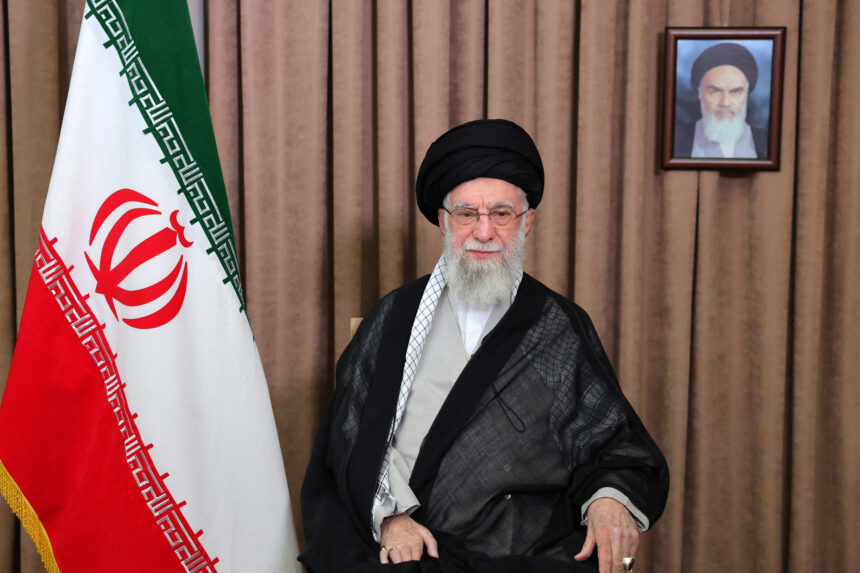
Israel has confirmed that Iran’s Supreme Leader, Ali Khamenei, was killed in Saturday’s massive joint US-Israeli strikes, according to two Israeli sources familiar with the matter. One of the sources said Israel had obtained photographic evidence of Khamenei’s body, while another indicated that an official announcement was being prepared.
Earlier in the evening, Israeli Prime Minister Benjamin Netanyahu said there were “many signs” that Khamenei was “no longer with us,” though he stopped short of formally confirming the death at that time.
The claim directly contradicts statements from Tehran. A spokesperson for Iran’s Foreign Ministry said both the country’s president and Supreme Leader were “safe and sound.” However, Khamenei has not appeared in public or in any official video messages since the strikes began, fueling speculation and uncertainty.
The reported killing comes amid an unprecedented wave of coordinated attacks by the United States and Israel on Iranian targets. President Donald Trump has openly indicated that the operation is aimed at overturning Tehran’s government — a declaration widely interpreted as a call for regime change.
According to Iranian state media, more than 200 people have been killed across the country since the bombardment began. Explosions were reported in several major cities, including the capital, Tehran, where thick plumes of smoke were seen rising above government and military facilities.
Iran’s Retaliation
In response, Iran launched what officials described as an “unprecedented” wave of retaliatory strikes targeting US military bases, Israeli territory, and other strategic sites across the Middle East. Missiles and drones reportedly struck densely populated areas, leading to widespread disruption of air travel and oil shipments throughout the region.
While the US military has reported no combat-related American casualties so far, security agencies have heightened alert levels domestically. The Federal Bureau of Investigation (FBI) has deployed counterterrorism teams, and the State Department has advised US citizens worldwide to exercise increased caution.
Regional and Global Reactions
The conflict has sent shockwaves through the Middle East. The United Arab Emirates described the situation as a “historic moment,” warning that world leaders had failed to ensure long-term regional stability.
Diplomatic efforts appear strained as global powers weigh their responses. The United Nations Security Council is expected to convene in emergency session amid mounting fears that the crisis could spiral into a broader regional war.
If confirmed, the death of Khamenei would represent the most significant leadership vacuum in Iran since the 1989 death of Ruhollah Khomeini. Under Iran’s constitution, the Assembly of Experts is tasked with appointing a new Supreme Leader, but such a transition amid active military conflict would be fraught with political and security challenges.
Analysts warn that the combination of regime-targeted strikes, leadership uncertainty, and retaliatory military action creates an unpredictable and volatile environment. Oil markets have already reacted sharply, and international airlines have rerouted or suspended flights over large portions of the region.
As conflicting claims persist and official confirmations remain pending from Tehran, the world is watching closely to see whether this marks a decisive turning point in Iran’s political order — or the beginning of an even more dangerous phase of confrontation.