
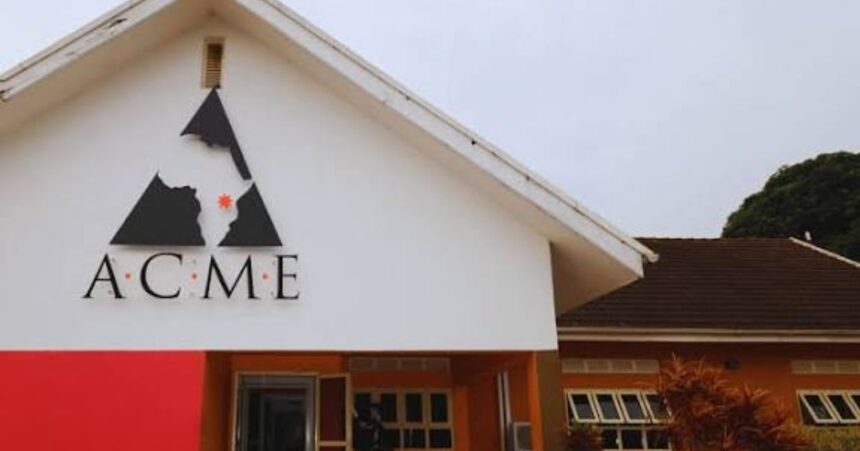
The African Centre for Media Excellence (ACME), a Kampala-based independent media organisation, had its operations suspended by Uganda’s National Bureau for Non-Governmental Organizations, a move that has heightened concerns about shrinking civic space just days before the country’s general elections.
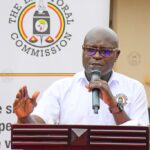
The suspension was confirmed by Stephen Okello, the Secretary of the NGO Bureau, who said the decision was based on allegations that ACME had engaged in activities “prejudicial to the security and the laws of Uganda.” Okello, however, rejected suggestions that the action was linked to the upcoming polls.
ACME, which has operated for 15 years, is widely known for training and equipping journalists in Uganda and across Africa, with a focus on investigative reporting, media ethics, and accountability journalism. Its suspension places it among a growing list of civil society organisations facing restrictions in the lead-up to the elections, including Chapter Four Uganda, the Alliance for Election Finance Monitoring (ACFIM), and the Human Rights Network for Journalists–Uganda (HRNJ-U).
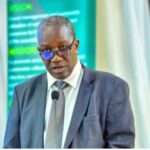
Dr Peter G. Mwesige, ACME’s founder and former executive director, expressed concern over the decision, describing it as part of a broader pattern aimed at limiting scrutiny of public affairs.
“Now more than ever, the independent media must rise to the occasion, provide accurate information, monitor official power, and facilitate public debate,” Mwesige said in a post on X, formerly Twitter. He reiterated that ACME has consistently promoted professional, ethical, and responsible journalism throughout its existence.
The suspension of ACME followed a similar directive issued against Chapter Four Uganda, a human rights organisation known for its work on civil liberties and the protection of vulnerable and marginalised communities. In that case, the NGO Bureau ordered the organisation to halt all activities pending investigations, while indicating it would later be given an opportunity to respond. Authorities also involved the Inspector General of Police and financial institutions to ensure enforcement of the suspension.
National Unity Platform presidential candidate Robert Kyagulanyi Ssentamu criticised the closures, describing them as an attack on democracy and accountability just days before voters head to the polls. He warned that shutting down rights groups and election-focused organisations undermines independent oversight of the electoral process.
Kyagulanyi also linked the suspensions to the recent arrest of civil society leader Sarah Bireete, saying the detention appeared to be punishment for sustained civic advocacy. He argued that the government’s repeated use of the phrase “activities prejudicial to security” has become a tool to silence independent voices critical of state power. He called on Ugandans to defend civic space and to participate in the elections peacefully.
The actions have alarmed both local and international observers, who caution that the clampdown on civil society and media-support organisations ahead of the polls risks weakening transparency, accountability, and public debate at a critical moment.
Authorities have not publicly addressed the growing criticism, maintaining that the suspensions are grounded in legal compliance and national security considerations.
As Uganda approaches the January 15 elections, pressure on civil society leaders, journalists, and media advocates continues to mount, raising fresh questions about the future of independent voices in an increasingly tense political environment.