
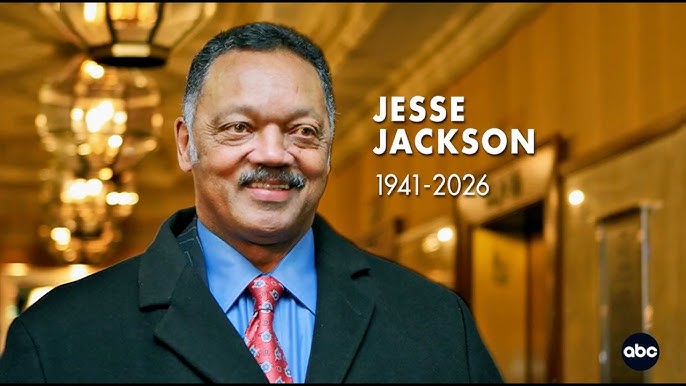
The United States and the global civil rights community are mourning the death of Jesse Jackson, the eloquent Baptist minister, activist and political trailblazer who rose from the segregated American South to become one of the most influential voices for justice and equality in modern history. He was 84.
A longtime Chicago-based leader, Jackson worked closely with Martin Luther King Jr. during the height of the civil rights movement and was in Memphis in 1968 when King was assassinated. In the turbulent years that followed, Jackson emerged as a central figure in the struggle for racial justice, carrying forward the movement’s call for equality, economic empowerment and political inclusion.
Born and raised in the segregated South, Jackson’s early life was shaped by the harsh realities of racial discrimination. He later became an ordained Baptist minister and a commanding orator whose speeches transcended church walls and resonated on the national and international stage. His activism evolved from grassroots organizing and protest marches to the corridors of political power, where he sought to institutionalize the gains of the civil rights era and advance human rights more broadly.
Over decades, Jackson built a reputation as a bridge-builder and advocate for marginalized communities, championing voting rights, fair housing, labor rights and expanded access to education. He also broke new ground in American politics, mounting historic presidential campaigns that expanded the visibility and influence of Black leadership within the national arena.
Tributes poured in from across the country and around the world. “The work, the spirit, what he has meant not only to the city, the state, the country and the world will continue to live on,” Davis said in a statement, reflecting the widespread recognition of Jackson’s enduring impact.
Rev. Jesse Jackson leaves behind a towering legacy that helped shape the modern civil rights movement and broaden the boundaries of American political life. From the streets of protest to the presidential campaign trail, his life’s work centered on expanding opportunity, dignity and hope for those long denied it.