

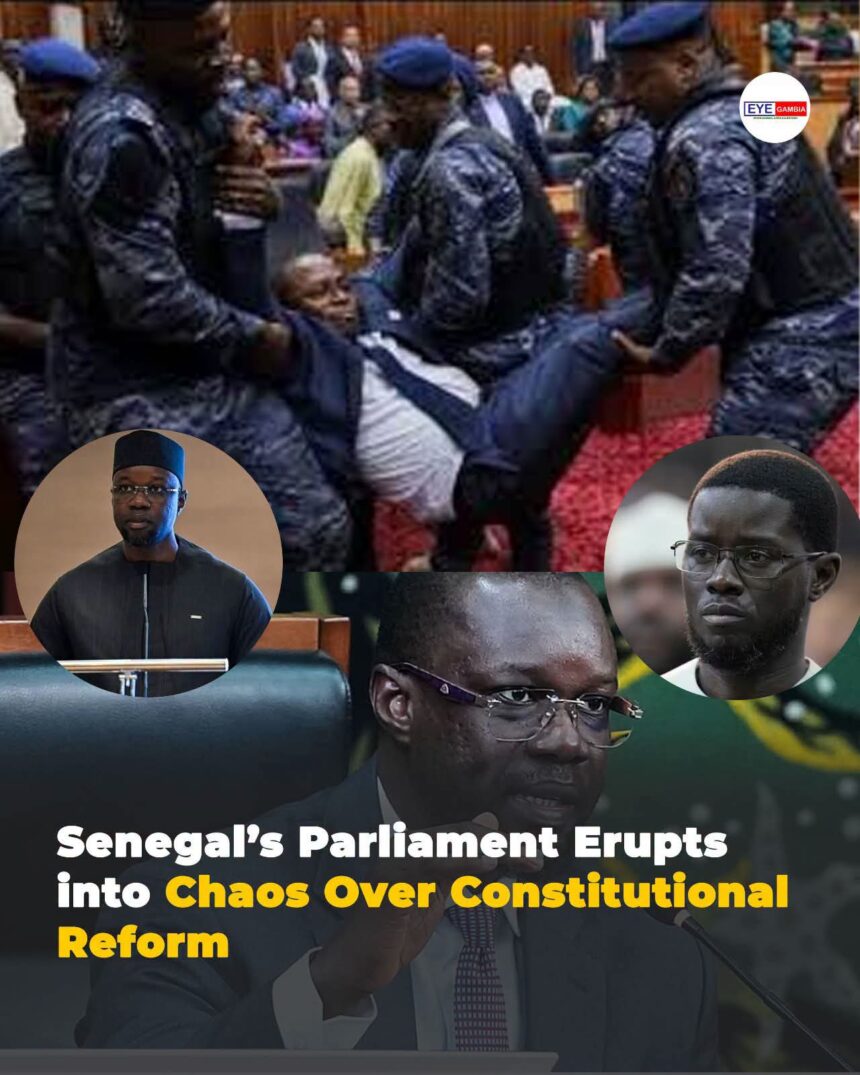
Senegal’s National Assembly descended into chaos during a heated sitting over proposed constitutional reforms, as lawmakers clashed over a bill that seeks to reduce presidential powers and strengthen Parliament.
Tensions flared after the ruling PASTEF party tabled the proposed amendments, which supporters say are intended to reinforce democratic governance by limiting executive authority and enhancing parliamentary oversight.
The situation escalated when opposition lawmaker Abdou Mbow was forcibly removed from the parliamentary chamber by security personnel, triggering protests from opposition legislators and further disrupting proceedings.
Despite the unrest, the ruling party used its parliamentary majority to pass the bill with 129 votes in favour, following a boycott by opposition members.
Speaking in support of the reforms, Justice Minister Moussa Sarr argued that limiting the President’s power to dissolve Parliament would strengthen democratic institutions.
“Allowing the President of the Republic only a single dissolution during his mandate amounts to breaking the traditional institutional balance,” Sarr said.
However, opposition leaders strongly rejected the proposed reforms, accusing the government of attempting to consolidate power under the guise of constitutional change.
Opposition leader Aïssata Tall Sall described the events in Parliament as “a dictatorship and an abuse of power,” arguing that the ruling party was undermining democratic principles.
Critics have also accused the leadership of the National Assembly of restricting debate and suppressing dissent during consideration of the bill.
The proposed constitutional amendments will now proceed to the next stage of the legislative process, with a public referendum expected before the reforms can take effect.
The developments mark another significant chapter in Senegal’s evolving political landscape as the country continues debates over constitutional governance, the balance of power between the Executive and Parliament, and the future of its democratic institutions.