
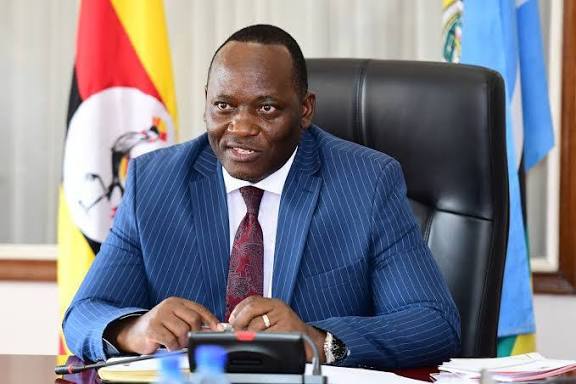
The Democratic Front (DF) party president Mathias Mpuuga has issued a strong appeal for opposition unity, urging leaders to rise above personal and political divisions in the interest of the country.
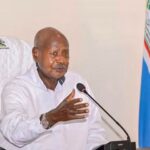
In a televised address aired by NBS Television on December 26, 2025, Mpuuga warned that continued fragmentation within the opposition could hand President Yoweri Kaguta Museveni and the ruling National Resistance Movement (NRM) an easy path to extending their grip on power, nearly four decades since Museveni first took office.
“We must put the country first,” Mpuuga said, stressing that the stakes of the coming election demand collective action rather than rivalry.
The brief but pointed address, delivered at a formal event and shared widely online, came against a backdrop of growing pre-election tensions. On-screen graphics during the broadcast highlighted fears of violence, arrests, and instability as campaigning intensifies nationwide.
Mpuuga, who founded the Democratic Front in May 2025, presented himself as a unifying figure capable of bridging the opposition’s deepening divides. His political journey, however, remains contentious. He broke away from the National Unity Platform (NUP) after a bitter fallout with party leader Robert Kyagulanyi, popularly known as Bobi Wine, following allegations of financial impropriety linked to a 500-million-shilling “service award” he received while serving as a parliamentary commissioner. The controversy led to his suspension from NUP and continues to shape public perceptions of his leadership.
Online reaction to Mpuuga’s unity call has been sharply divided. While some welcomed the message, others expressed skepticism, questioning his credibility and motives. Comments on the NBS Television post ranged from cautious support to outright hostility, reflecting broader mistrust and fatigue within sections of the opposition support base.
Mpuuga’s appeal comes at a time when opposition parties face mounting pressure from what rights groups describe as increasing state intimidation, arbitrary arrests, and violence against dissenting voices. The Electoral Commission has repeatedly urged voters to “vote and go home” to avoid clashes, even as opposition leaders challenge the credibility of the electoral process, including the planned use of biometric verification kits whose legal basis has been questioned.
Other opposition figures, including Leader of Opposition Joel Ssenyonyi, have called for peaceful but assertive participation in the polls, arguing that disengagement would only strengthen the ruling party. Meanwhile, President Museveni, now 81, continues to campaign on a platform of stability and experience, despite growing economic pressures and rising youth unemployment.
In October, Mpuuga shelved his own presidential ambitions, opting instead to defend his Nyendo–Mukungwe parliamentary seat — a move analysts interpret as a strategic retreat amid fractured alliances. Political observers warn that unless opposition forces find common ground soon, history could repeat itself, delivering another decisive victory to Museveni similar to the disputed 2021 elections.
As the countdown to 2026 continues, Mpuuga’s call has reignited debate over whether Uganda’s opposition can overcome mistrust and rivalry — or whether disunity will once again define the electoral outcome.