
Venezuelan President Nicolás Maduro is in custody at a New York detention centre after what U.S. President Donald Trump described as a “large-scale” American military operation that culminated in Maduro’s capture early Saturday, marking one of the most dramatic escalations in U.S.–Venezuelan relations in decades.
Speaking hours after the operation, President Trump said Maduro and his wife, First Lady Cilia Flores, were “captured and flown out of the country” during coordinated U.S. strikes targeting key locations in Venezuela. Trump claimed the operation was conducted by the U.S. Army’s elite Delta Force unit, following months of military buildup in the Caribbean.
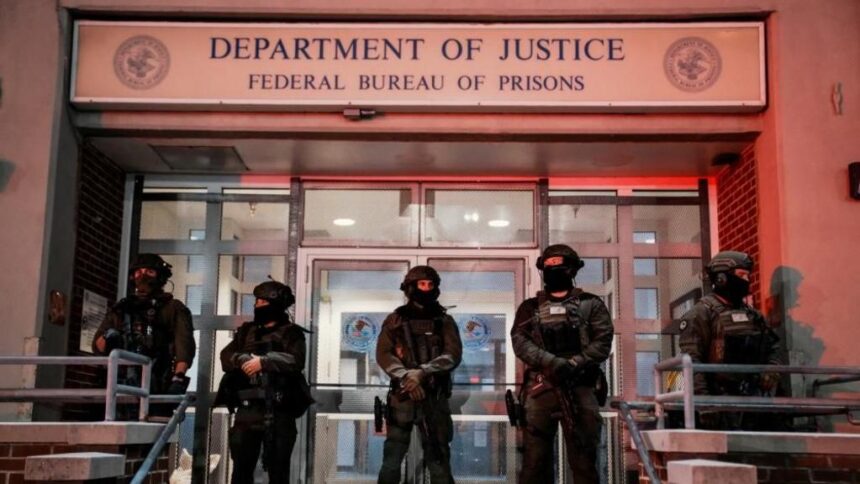
According to U.S. officials cited by CBS News, Maduro and Flores were transported from Caracas and flown to the United States, landing in New York on Saturday. Maduro was later transferred to the Metropolitan Detention Center in Brooklyn, where he is expected to face federal charges related to drug trafficking and alleged collaboration with gangs designated by Washington as terrorist organisations.
U.S. Attorney General Pam Bondi confirmed that a superseding indictment has been filed against Maduro, similar to charges first announced in 2020. The Venezuelan leader has consistently denied the allegations, including claims that he led a drug cartel.
The military action followed months of heightened U.S. activity in the region, including the deployment of the USS Gerald R. Ford aircraft carrier and several other warships to the Caribbean, as well as a series of deadly strikes on more than 30 vessels that the Trump administration says were involved in narcotics trafficking.
In a press conference, Trump said the United States would temporarily “run” Venezuela during what he termed a transition period. He added that Washington’s immediate priorities would be to restore oil production and stabilise the country.
“We’re going to run it for now, until such time as we can do a safe, proper and judicious transition,” Trump said, adding that U.S. oil companies would help fix Venezuela’s “broken infrastructure” and “start making money for the country.”
The remarks have sparked intense international debate, with critics questioning Washington’s intentions and the legality of the operation under international law. Some analysts argue Trump’s comments may signal that the U.S. is less focused on fostering a democratic transition and more concerned with economic and strategic interests, particularly Venezuela’s vast oil reserves.
In Caracas, the Venezuelan government condemned the strikes as “military aggression” and announced a state of national emergency. Authorities urged citizens and political organisations to mobilise in defence of national sovereignty, as reports emerged of explosions and military aircraft over the capital during the early hours of Saturday.
Despite Trump’s claims, independent verification of the full scope of the operation and the circumstances of Maduro’s capture remains limited. International reactions were still unfolding, with regional leaders and global powers closely watching developments that could reshape political alignments across the Americas.
As Maduro awaits court proceedings in New York, the situation remains fluid, raising profound questions about Venezuela’s future, U.S. interventionism, and the broader balance of power in the region.