
President Yoweri Museveni has cautioned leaders against imposing themselves on citizens, saying sustainable leadership must be rooted in persuasion, service and consent rather than intimidation.
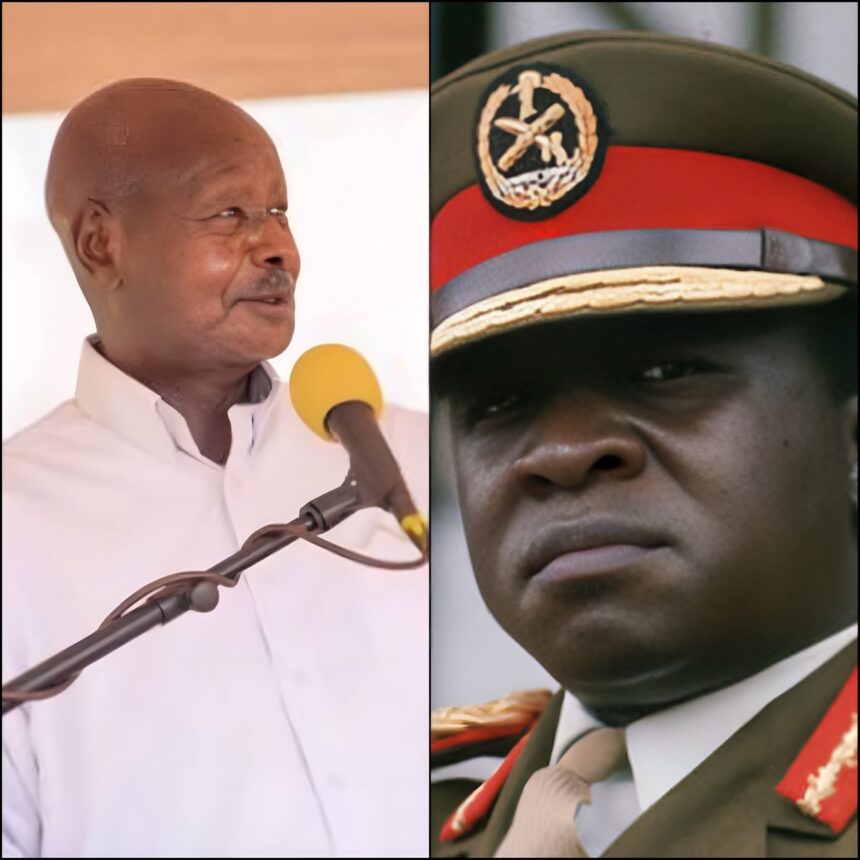
Speaking during the commemoration of Janani Luwum in Mucwini, Kitgum, Museveni reflected on Uganda’s political history and contrasted his leadership philosophy with that of former military ruler Idi Amin. He argued that Amin governed without the people’s consent and relied on fear rather than legitimacy.
“No leader should force themselves on the people,” Museveni said, emphasizing that leadership must be earned through convincing citizens and delivering tangible results. Drawing from scripture, he added that leaders should allow their good deeds to speak for them, rather than resort to coercion.
The annual memorial of Janani Luwum, who was killed in 1977 during Amin’s regime and later recognized as a martyr, has become a symbolic platform for reflecting on governance, justice and accountability in Uganda. Museveni used the occasion to underscore what he described as the importance of moral authority in public leadership.
The President, who was recently declared winner of the January 15, 2026 general election, also addressed allegations by opposition figures claiming electoral malpractice. He dismissed the accusations and accused some political actors of using intimidation tactics reminiscent of past authoritarian practices.
Museveni further stated that government investments in northern Uganda were implemented through dialogue and persuasion rather than force. He pointed to infrastructure, education and economic empowerment programs in the region as examples of what he described as inclusive development.
His remarks come at a time of heightened political debate following the elections, with opposition parties questioning the credibility of the process. By invoking the legacy of Janani Luwum and referencing Idi Amin’s era, Museveni framed his message around the need for leadership grounded in service, historical lessons and national unity.